
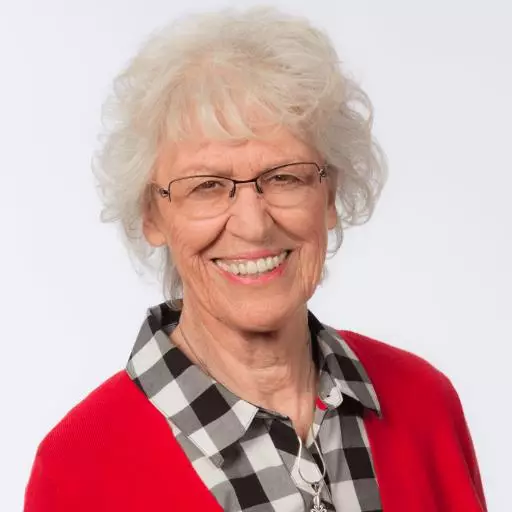
Telling the Truth for Women
Jill Briscoe
Empowering the Next Generation
How are you pouring into those younger than yourself? What kind of legacy are you building to leave for your children? Jill Briscoe takes us to Proverbs 31:1-9 to ponder the words King Lemuel wrote fondly about his mother and the faith she passed along to him.
Whatever age or stage we’re at, God calls us to be a blessing to the next generation. The gifts God has given us never age, and they’re supposed to be used. Jill encourages us to start loving, teaching, and praying for the younger ones coming along. The impact will be not only on the next generation, but for eternity!
Jill Briscoe: I'm going to talk from a rather unusual passage of scripture. It might be unusual because you know the other passage very, very well, and I want to talk from Proverbs 31. But I'm not going to touch this bionic Christian woman that lurks in these pages.
If you're a lady, you're just sick to death of Proverbs 31 usually after a bit because we always get taught it. And this is this wonderful lady who is perfect and everything else. But I'm not going to use those verses. I'm going to use the verses that precede them in Proverbs 31.
The reason is it's advice written down by one generation for another, by a woman, a queen, who is instructing her son on how to be a king and how to be in his generation a mover and a shaker and an influencer for good and for God. And then, after she's given all this advice in verses 1 to 9, we start with verse 16 on the woman of noble character that we know so well.
But it might be of interest for you to know that the woman who is in Proverbs 31 that we know so well, who just seems to do everything right, never existed, save in the imagination of the person who wrote about her. And we're not quite sure who wrote about her. I have a theory it's the same man that wrote the first nine verses, but we're not sure.
However, the woman that wrote the first nine verses was real, flesh and blood. She actually existed, and so did her son, King Lemuel. Now let me just read those nine verses to you.
These are the sayings of King Lemuel—an oracle his mother taught him. "Oh my son, oh son of my womb, oh son of my vows, do not spend your strength on women, your vigor on those who ruin kings. It's not for kings, oh Lemuel, not for kings to drink wine, not for rulers to crave beer, lest they drink and forget what the law decrees and deprive all the oppressed of their rights.
Give beer to those who are perishing, wine to those who are in anguish. Let them drink and forget their poverty and remember their misery no more. Speak up for those who cannot speak for themselves, for the rights of all who are destitute. Speak up and judge fairly; defend the rights of the poor and needy."
Now then, that was not written by a woman. That was written by a man. That was written by a man about his mother, about his mother's advice. Now, there are enough of you here to be raising teenagers or to be involved with teenagers as a youth leader or a Sunday school teacher. Did it ever enter your mind, certainly in junior high years, that those kids might one day sit down and write a book about your advice? You wish, right?
Never in a thousand years. I remember back to those days and I remember thinking, if we get through this and if they get through this by the skin of our teeth, that'll do me fine. But the idea of them ever writing a book about my advice would never have entered my head. I just wouldn't believe I could be so lucky.
Here's a king and he's writing a document and he said, "My mom did some things that I want to tell you about because she passed on her faith. She passed on influence to me, and I'm the next generation. And she empowered me to be the king that I am."
Stuart's mom was a grand old lady. She was a grand middle-aged lady and a grand young lady as well. But she was a fearsome lady. I was really frightened of my mother-in-law. She was very, very strong, very opinionated, very powerful, very wonderful, a Jesus lover, glory giver.
But she cast a long shadow. She has been dead a long time, but there isn't a day that Stuart and I do not quote her. Not one day. I can't think of a day this month we haven't quoted Mother Briscoe. She cast a long, long shadow. And you know something? It's all good.
And here we are getting up to where she was when she died, and I'm thinking, I wonder if my kids will be like this. I wonder if my kids—there'll never be a day that goes by when they don't quote me. I wish. Who will know?
One of the things she used to say is—well, she used to say a lot of things. And our kids used to say, our children about their grandmother when they'd done something wrong, "What would Grandma say? What would Grandma say?" And so even in their life, she reached over two generations and poured out her influence, empowering them to live for God and for good.
Now, one of God's purposes is that everybody that claims to be a Christian does the same thing. That we find somebody somewhere, whether they like it or not, and pass on our faith and pass on what we believe. Especially grandparents. I don't know if you know, if you've watched the statistics, how many incredibly thousands of people are living with their grandparents who are bringing up that generation.
The marriages have fallen apart in the sandwich generation. The single parent has come back home and the grandparents find themselves housing the single parent, their own child who has come back, and then the child has to go out to work and they are bringing up that generation as well.
There is incredible social results and repercussions to all of that. But what an incredible advantage and privilege and opportunity it is as well. I don't know if you know that little poem:
In the dim and distant past when life's tempo wasn't fast, Grandma used to sit and knit, crochet, tat, and baby-sit. When the kids were ever in a jam, you could always count on Gram. In a day of gracious living, Grandma was the girl for giving.
Verse two: Grandma now is at the gym, exercising to keep slim. She's out touring with a bunch, taking clients out to lunch. Nothing seems to stop or block her, now that Grandma's off her rocker.
Yes, one of the problems with Grandma when she starts getting to this age, she loses it in front of hundreds of people all the time. It is a day and age when we have the energy and we have the ability to live longer, apparently. That's a lot more years to give the influence that we want to to the next generation.
You know something? I have discovered the gift doesn't age. Now what do I mean about that? Spiritual gift. The ability to be a teacher, to be an instructor, to be a trainer, to take your son and somebody else's son and somebody else's grandson and do what this woman did and just lay it out in such a way that not only did he never forget it, but I believe he put it into practice and wrote it down for his generation and the next generation.
I learned that lesson years ago when Stuart and I were asked to go to Europe to speak to a youth convention and there were thousands and thousands of European kids. Eastern Europe had just opened up, and so all of those young people came from those countries as well as Western Europe. You could only come to that conference if you were heading out for missions. If you were going to give your life to career missions, you had to state that or you couldn't come.
And here we stood up to speak to thousands and thousands and thousands of European kids. And I remember thinking, it's in good hands. This next generation is in good hands. Anyway, Stuart and I were certainly the only gray hairs there, and the people that were teaching them looked like junior high kids to me.
The youth leaders of Europe are wonderful and they're very young. They're in their 20s, high 20s I would say, the ones that are really making waves. And here were Stuart and I hobbling around the place, and I said, "You know, I don't think we should have come. This is the time to let the next generation teach the next generation. What are we here for?" Plus, I was a little out of practice. I was rusty. I hadn't spoken to kids for a long time.
Well, also you're talking through an interpreter, which halves your material and doubles your frustration. Anyway, I had to go first in the evening session. And the first 20 minutes it was like pushing smoke uphill. It was so frustrating. And I just felt I wasn't getting anywhere. It was—I just wasn't doing it. And I began to panic inside.
And suddenly something happened. It was a bit like I used to skate. I skated semi-professionally, ice skating. And then I didn't for 25, 30 years. And then I came here and one day with the youth group—I used to run the youth group here—I got on the ice down at Mayfair when they used to have a skating rink there. You wouldn't have known I'd ever been on skates. I was hanging onto the barrier for about 20 minutes. And then suddenly it all began to come back.
And at the end of the night, I was doing it. And it was like that up there in the pulpit. And the wind came into my sails and a little voice, the still small voice of God, said in a very clear sentence, "Jill, gift doesn't age."
Spiritual gift doesn't age. I've always had a heart for kids. That's where my training is. I'm a teacher by trade, 13 years in youth mission in Europe in the streets doing evangelism. Gift doesn't age. And it was a huge thrill to get hold of that. And I would like to encourage you older people, gift doesn't age. Spiritual gift doesn't age.
And so this mother—I don't know how old she was—she believed that and she just got on with it. And gifts aren't gendered. That's the second thing I'd like to say. Spiritual gifts are not gendered. Both men and women can teach the next generation and can pass on what we need to. This is for us to do in partnership, men and women together.
So if gift doesn't age and gifts aren't gendered, what are we supposed to be doing? Proverbs 1:8 says, "Listen, my son, to your father's instruction. Do not forsake your mother's teaching. They will be a garland to grace your head and a chain to adorn your neck." And as I looked for this scriptural example if you wish and found this woman, I found that she did three things.
And the son tells us, the son speaking of his mother says, number one, "She loved me." Now all of us can do that. There isn't one of us here that can't go out and love some kids. Love the next generation. Love the kid next door whose parents don't love him anymore. Or the kid over the street, the teenager whose father almost loves him. That's our job.
And if we know Christ, we can go out into the world and just start loving people. Just start and love them. Count them as our own. She loved me. She called him Lemuel. Do you know what that means? Literally, for God. He's for God. That's why I've called him Lemuel.
And she vowed a vow. She had this dedication where she gave her son to God. This child, she was determined, was loved of God and loved by his mother. Much loved child. And she dedicated him to the Lord. "Oh my son, oh son of my womb, oh son of my vows." Three "ohs." Repetition is an emphatic expression of anxious love here. The way it's written, "Oh, oh, oh, where's—where's the oh? Oh where's the oh?"
And of all people, believers in Christ ought to be running around their world finding someone to love. Not so hard with a great big "oh" inside of us. C.S. Lewis says love anything and your heart will certainly be wrung and possibly be broken. And those of us that have been hurt because we've loved and been betrayed or deserted or rejected find it very hard to love again.
And your heart, if you've given it away, is very easy to be broken. But if you keep it to try and keep it safe and don't put it out there again, it will become hard and cold and brittle. Lewis says the only safe place to prevent you ever getting hurt again is hell, where there is no love.
And so you take the risk, you go out on a limb and you love and you love and you love. And you get this "oh" going inside of you. And you say to God, "Break my heart for the things that break the heart of God," which is people and which I believe is the next generation. And this young king says, "She loved me." He wrote it down, wrote a book about it. Is that what people that we've influenced are going to say about us?
All of us can love if we have Jesus. For this you need Jesus, but for this I trust you have Jesus. He is love. I just finished a book yesterday on 1 Corinthians 13 on love. So for this we need Jesus, but for this we have Jesus.
She loved me. Secondly, she prayed for me. He was the son of her vows. A vow of dedication. There is a hint of the Nazirite vow here. Hannah came to the temple and said, "If you give me a son and lend him to me for a little while, I'll give him back to you. He'll be for God." She called him Samuel, not Lemuel, but it has a similar meaning.
When Mom Briscoe—there she is again—had her babies in the cot in the bedroom, she would go with her husband and they would pray over the empty cot before the child was ever born. And they would pray, "God, make this child an influence, a change agent for you in the world." And so to me, it's no surprise that both Stuart and Berne Briscoe have spent their lives roaming the world loving it back to God. Why? I don't think it's too much to do with them. I think it's to do with their mother.
The power of a mother's prayers. Incredible. The best thing we can do is on our knees. The most powerful thing, and it's something the next generation can do nothing about. I like that thought. Sometimes when my beloved unbelievers get together—and they are the most wonderful, wonderful, wonderful people in the world—they don't know the Lord.
I used to get very discouraged until I realized I could sit there and I could begin to pray. Yes, I was continuing to talk and interact, but I just went person by person by person. And I remember once getting a real neat feeling. I thought, "They can't do a thing about this. They cannot stop me praying for them. They can't stop me praying for them. They can reject what I say, but they're helpless against my prayers." And I believe that.
And so prayer isn't something you do. Prayer is somewhere you go. It's the waiting room where God waits for you to wait and me to wait. He's been waiting long time for some of us maybe. And we intentionally put ourselves into that waiting room and we find we've got company. We've got the Lord Jesus there who's also praying for those we love.
And all that can go on when you're interacting with people and you can pray for them. Try it next time you have a family get together. And this king said, "She prayed for me. My mother loved me, and my mother prayed for me."
This queen said to the king, "There are destructive forces, oh Lemuel, around you. There are those who ruin kings." Now we are trying to raise up a generation of royalty, of spiritual royalty for God and for good. And there are destructive forces. We've got a lot against us.
The counseling that I'm doing on the Christian college campuses would blow your mind. Absolutely blow your mind. "How can I ask my girlfriend to have an AIDS test?" Those sort of questions on our Christian campuses. It is—it's heavy to be there. It really is.
And these are some of the most wonderful colleges and college professors and leaders, and they are pulling their hair out at the moment with what they are trying to cope with on the college campus. And they're saying, "These are the kings and these are the queens of the next generation. These are redemption's royalty young people. How can we love them? How can we pray for them? How can we train them?"
And that's the third thing she did. "These are the words my mother taught me." She taught me. The word is very strong. Let me tell you what it means in the Hebrew language. It means to chastise literally with blows or figuratively with words, hence to instruct. Means to chastise, correct, instruct, punish, reform, reprove, teach, and it also is used with the word "sore," s-o-r-e.
She was serious, this lady. This is how she was training him. Spare the rod and spoil the child and all of that. She probably would have been arrested in this day and age and put in jail even though she was the queen. But she taught. That's what the word means in the Hebrew. She was going to hammer it into him one way or another.
She did not back off. She did not say, "When you're old enough to choose right from wrong, I'll maybe get around to telling you about it." She taught him. A child who is never reproved feels his actions have no consequence. Feels he is no matter. If it doesn't matter what he does, then he mustn't matter. And so a child who is not corrected feels he's not worth correcting.
Well, she didn't fall into that trap. She told him actions had consequences. If you drink to excess, you'll forget your responsibility. "Don't drink and forget what the law decrees. It's not for kings, oh Lemuel, it's not for kings." If you're obsessed with sex, she said, then destruction will be the result.
I think of Solomon, who was supposed to be the wisest man that ever lived. I don't know how wise you can be when you say "I do" 700 times. He had 700 wives and 300 concubines. Do you know that? Not very wise, huh?
I remember when we were at Bible school, we had many foreign students, and there was a young man who was giving a little talk in Bible school. And his talk was on Solomon. They were learning how to put talks together and sermons together and it was very, very hard to do it in somebody else's language. And this young man was Japanese. His English was not very good.
And so he struggled a lot, but he chose Solomon. And I'll never forget the day in front of all the other students when it was his turn to give his little talk, and he gets up and he says, "Solomon had 700 wives and 300 cucumbers."
He is now the head of one of our best youth centers in Japan up in—near Mount Kilimanjaro. And every time we see him, he says, "Solomon!" because he remembers that, and we remember it.
It says when Solomon was old—I think it's a very sad verse—his wives, his foreign wives stole his heart away from the Lord. He didn't finish well. So sad. When he was old, he didn't finish well. Ted Turner said that the Ten Commandments are not commandments, they're suggestions. And that's what a lot of people believe.
And yet this woman said, "Son, there's a higher standard for you than for a commoner." And if we are believers, we are not commoners, we're kings and we're queens. And people have a right to hold us to a higher standard, I believe.
So she talked about behavior and belief. "Live like a king," she said. "Live like a king." I'm sure those of you that have heard Stuart over the years have heard him tell that wonderful story, true story so it's supposed to be, of the two kings' sons, the Duke of Kent and the Prince of Wales, in London. And they were just 12 or 13 running around in Hyde Park having fun.
And they saw a British policeman there with his old-fashioned tall hat on like they used to have. And the Prince of Wales said to the Duke of Kent, "I bet you sixpence that all fat policemen have bald heads." The other kid said, "Okay, you're on." Well, they wondered then how to find out.
And just then a scruffy little urchin from the backstreets of London came along and they said, "Hey, can you use your catapult and get rid of that policeman's hat because we want to see something? And we'll give you sixpence if you can do it." And he said, "Sure." So "pop," hat off. And he had a bald head.
So the two young men were busy changing the money and paying their debts and of course the policeman came along and just got hold of them. And then he got his paper and pencil out and he says, "Okay now, you've assaulted my person. Who are you?" And he said, "Well, officer, I'm the Prince of Wales."
He said, "Now come on." He said, "I really am the Prince of Wales." And so then he turns to the other kid and he said, "And who are you?" And he said, "Well, I'm the Duke of Kent." So of course he was getting more and more mad.
And so then he turns to the urchin and he says, "Well, who are you?" And the urchin says, "It's okay guys, I won't let you down. I'm the Archbishop of Canterbury."
I'm the Archbishop of Canterbury. Now why do we laugh? Because we know why we laugh. That's not how kings' sons should be behaving. We're supposed to walk worthy of the calling, worthy of the calling. "It's not for kings, oh Lemuel, it's not for kings." And when someone of the royal family falls short, we all feel let down and we somehow expect something better. And I think we have a right to.
And when the world looks at us, they have a right to too. And we've got to get that over to the kids. And we've got to talk it out. We've got to communicate. We've got to spell it out. We've got to be intentional. We've got to be specific. She got pretty specific. She talked about drink, "don't drink and drive." There it is. She talked about sex.
When I had a chance in the pulpit at Grove City, I talked to the girls and I said, "It isn't a question of you getting pregnant these days, it's a question of you getting AIDS. And so your parents have a lot harder job than we had with our parents. And they're frightened. And they're going to hopefully put more boundaries and rules on you for this reason."
It's wonderful for me now to go onto the campuses and say, "Let me explain your mother to you!" When I have Judy with me, it's wonderful because she explains me for them and then I explain her to them and we have a great time up there. But we just need to spell it out, be very, very specific.
I remember when our children were teenagers here in this church, we had a wonderful youth pastor, which we do now, we have a fabulous youth program here. And he and his wife were singers for the Billy Graham Crusade and then the Leighton Ford Crusade. They were vibrant, colorful, marvelous youth leaders. And we had the privilege of having our three children through their hands. Their mark is indelibly left on their lives. No question.
I think that three of them are in full-time service today in large amount for the influence of Bob and Jane who did what I'm talking about for the next generation. They had every, you know, year then, instead of every month which we need now, a talk on sex. And when the kids would come home, I'd say, "Well, what did Bob say?" And they'd say, "No Mother, we are not to tell you and you don't need to know because it's just between Bob and us. And no, we—you can't know."
And so I would try and get it out of them every which way and I never could. They wouldn't tell me. "No, it's just between Bob and us, between our youth pastor and us." It was called "Bob's Rule," they told me. Bob has a rule. He's just got one rule and that's what this is all about. Well, I never did figure out what Bob's rule was until Judy, our daughter, was getting married and I said to her, "Wouldn't you just tell me now? What was Bob's rule?"
And she said, "Oh, it was really quite simple. Don't lie down, don't take anything off, and nothing below the neck." I said, "Really? That was it?" She said, "Yes, but," she said, "think about it, Mother." She said, "It's saved me a time or two. It's saved me a time or two." It was so specific. It was so specific. On her wedding day, Bob sent her a telegram: "Forget the rule."
But we have to be specific. The kids need it spelled out, literally. And we have to do that. So we need to be intentional and we need to be specific. We need to talk about their affections; we need to talk about their addictions. And we need to give the why. She gave the why. "It's not for kings, oh Lemuel, because if you do that, this will happen. Actions have consequences. You are free, young king, to do whatever you want. But you're not free to choose the repercussions of your actions. You're free to choose your actions but not the consequences." And that's what we need to tell people. That's what we need to tell people.
So we need to give the why. "Lest thou drink and forget the law and pervert the judgment of any of the afflicted." And we need to live it out. This business about give wine to those that are in trouble is a reference to the habit of the society that was formed to help people being crucified or dreadfully put to death. And they would offer them wine or vinegar to stop the pain, the edge of the pain, as they did to Jesus. There was a society of women in Jerusalem that looked after people like that and they offered it to him and he declined it, if you remember.
And so that's what that's referring to. Think about the people that really need you. That's what she's saying. And think about your rights and responsibilities secondly. Think about your rights and responsibilities. You are free. You're king. You're it. Buck stops there. You can do and live exactly as you like if anybody else in your kingdom doesn't have that prerogative. You have the freedom to do what you like.
But with that right as king comes a corresponding responsibility. There are privileges of royalty, there are perks of freedom. What are you going to do with it? Stuart and I had the incredible privilege of going to the White House and leading the Bible study there. There are seven or eight Bible studies in different departments of government. Pray for the Christians in Washington. There is so much happening, so many people in high places who are seeking to influence the next generation and teach and pray and love the next generation.
And Stuart took the passage from Timothy where we are instructed to pray for kings and for government so that we might live quiet and peaceable lives. And as he unpacked it in that room with those people in it, it was a perfect passage to teach. Absolutely perfect. And he talked about freedom and he said to those people there, "I've been talking a lot to people about what freedom is for. That's what we're trying to defend. That's what we feel was attacked. But freedom for what? Freedom to live peaceable and godly lives in order that," the scripture says, "the gospel might go forth in our generation."
Freedom to live as we want? That's what most people think the freedom is for. Freedom to be as selfish as our selfish selves wish we want to be? No. Freedom in order to do the things this woman was telling her son to do: to look out for the oppressed, to speak up for those who can't speak for themselves, to get going and do something about the social mess we have on our hands and the poorest of the poor and the people that are disadvantaged who have no one to work on their behalf. That's what freedom is supposed to be for.
And so as freedom comes to us or as we experience freedom, there is a corresponding right or responsibility that matches the privilege that we're given. I thought of the passage and actually when my turn came then, I used Isaiah 32.
And there's a wonderful thing here talking about the kingdom of righteousness. "When a king reigns in righteousness, then rulers will rule with justice. And each man will be like," and then there's three things. And it's just a wonderful little verse here, hidden in Isaiah 32. When you get it right at the top, when the king is righteous, he'll choose righteous people and there should be a trickle-down influence. Then each man will be. And you've got somebody who is not righteous at the top, then the opposite might pertain.
And the three things that we should be as we are ruled by government and people who are righteous and the thing is right at the top. "Each man will be like a shelter from the wind and a refuge from the storm, like streams of water in the desert and the shadow of a great rock within a weary land."
And each of those pictures is priceless. Each man, each of us should be like, when the king is king, when the King Jesus is king, but also please God when our leaders are godly and living royal lives. Then we should be like a shelter from the wind. People should be able to run into our lives and find shelter and a refuge from the storm, like streams of water in the desert.
Is that what your life's like? Is that what mine's like? People that are thirsty and desperate for all sorts of reasons. Do they come and find the water of life and the shadow of a great rock within a weary land? We are living in a weary land, in a weary world, I tell you. And we are supposed to be the shadow of the great rock. We are not the great rock. He is the great rock. It says in the scriptures, he is the great rock. What's a shadow? I looked it up in the dictionary.
An inescapable companion. An inescapable companion. And you and I are supposed to be an inescapable companion of the rock who is our God and our king. And when that happens, there will be a reflection. There will be something of the rock about us and people will find that refreshing in a weary land. And that's what happens when the king is king and certainly when Jesus is king in our lives.
And so the gifts that God has given us that never age and aren't gendered are supposed to be put to use for this next generation. And we're supposed to speak up for these people as an advocate, as a healer and a giver of mercy, as a teacher and a trainer. We're supposed to pass it on.
You might think, well, I don't have any of those abilities and I don't feel I have any influence and I'm not a teacher and I don't seem to have anybody to tell or to pass things on. Never dismiss the day of small things. It says in the scripture, "Don't despise the day of small things." If you feel that you're living in a world of small things and you don't feel you have that influence, you just never know.
When I was in Romania years ago, I was at a conference and a beautiful young Romanian girl who was a leader in her country reaching women for Christ gave her testimony one night. And I just was absolutely amazed at her story. She was brought up in a communist home by the communist cadre—her father was the cadre, her mother was his wife, died-in-the-wool communists.
But in her extended family that lived in two very small rooms all her life, there was an older lady who was the grandma, one grandparent. And this little girl was brought up at her grandmother's knee in this communist home. And this woman was a believer, nearly beside herself because of what she was seeing was happening to her grandchildren. But she took this child on her knee as often as she could and she'd read her a book and she'd wait until it was pretty well safe. And then she would whisper into her ear, "God loves you. God loves you." And then she'd go, "Shh, shh."
Well, the grandmother died. Communism fell. And the girl is now 21. She walks downtown to get the loaves of bread and stand in the long lines. And a man is standing in the middle of her square, a man from the west, a preacher who's come with Bibles. And he's preaching and she is absolutely mesmerized. And she's standing there and it's all beginning to ring bells. Everything he's saying is ringing bells.
And she walks up to this man and she says, "Excuse me, sir, can you tell me about the God who loves me? Can you tell me about the God who loves me?"
And so he led her to the Lord. And this young woman became a force, a huge force in the first days as the wall was tumbling and it was opening up to the west. And she arrived as a leader about a year and a half later in the conference that I was taking. And I was just mesmerized by her whole story, but specifically by the influence of a godly grandmother against all odds. All she could do was whisper into her granddaughter's ear. But it was enough. It was enough.
And God is waiting for us to take the huge opportunities that we have. We are not restricted. And gift doesn't age. So let's get on with it. Pray with me if you will.
Heavenly Father, we would see the advantages that we have and thank you for the privileges of living in this country, of the measure of freedom that we have. Teach us what it's for and remind us that this freedom is not to be abused. It is not that we should be free to do as we want and live as we like. "It's not for kings," you say. "It's not for kings."
Help us to know how to live as a king, as redemption's royalty in our generation. And help us to go out into our world day by day looking for people to love, looking for people to pray for, and looking for people to talk to. And Lord, give us boldness, holy boldness. Help us to be so convinced of the Lord like this queen was, so convinced that your law is truth and truth is truth for all generations, that we may go out and shout it from the housetops while we may. We ask that you would take us and bless us and make us a blessing to the next generation. For Christ's sake, Amen.
Featured Offer
Every believer faces temptation, but God has not left us to fight these battles alone. Through His Word and His power, we can recognize temptation, resist the enemy’s schemes, and stand firm in God’s strength.
As our thanks for your gift today, we’ll send you Stuart and Jill Briscoe's 4-message series, Triumph Over Temptation. In these practical and encouraging messages, you’ll discover biblical truth to help you overcome temptation, grow stronger in your faith, and experience victory through Christ.
Your gift will help share the timeless truth of God’s Word with people around the world searching for encouragement and the Life found only in Jesus. Thank you!
Past Episodes
- A Lifetime of Wisdom
- A Little Pot of Oil
- A View from the Porch Swing
- Are You Good Soil?
- Art of Leadership
- He Came to Give Us Life
- Heart Hunger
- Here Am I, Send Aaron
- Hidden Treasures
- Hope for the Disheartened
- How Do I Find Joy?
- How to Be Up When You're Down
- Lessons from the Boy Jesus
- Let's Talk
- Life Lessons
- Life that Works
- Living Above the Circumstances
- Living in the Word
- Living Love
- Lost and Found
- Searching
- Seeing Through Suffering
- Shaking Up Your World
- Shelter from the Wind
- Six Things a Mother Can't Do
- Slaying Giants
- Solid Ground
- Spiritual Arts
- Take 5: A Christian Point of View
- The Balancing Act
- The Cutting Edge
- The Fatherhood of God
- The Heart and Soul of Friendship
- The Heartbeat of the Master
- The Holy Spirit
- The Holy Spirit and You
- The Innkeeper's Daughter
- The Names of God
- The New Normal
- The Power to Change
- Triumph in Trouble

Featured Offer
Every believer faces temptation, but God has not left us to fight these battles alone. Through His Word and His power, we can recognize temptation, resist the enemy’s schemes, and stand firm in God’s strength.
As our thanks for your gift today, we’ll send you Stuart and Jill Briscoe's 4-message series, Triumph Over Temptation. In these practical and encouraging messages, you’ll discover biblical truth to help you overcome temptation, grow stronger in your faith, and experience victory through Christ.
Your gift will help share the timeless truth of God’s Word with people around the world searching for encouragement and the Life found only in Jesus. Thank you!
About Telling the Truth for Women
Telling the Truth exists to make available sound biblical teaching, practically applied, with a view to producing lives that glorify God and draw people to Christ. The whole of our ministry is to encourage, console, strengthen, teach, and train.
About Jill Briscoe
In addition to sharing with her husband in ministry with the Torchbearers and in pastoring a church in the United Sates for thirty years, Jill has written more than forty books, travelled on every continent teaching and encouraging, served on the boards of "Christianity Today" and "World Relief," and now acts as Executive Editor of a magazine for women called "Just Between Us."
Jill can be heard regularly on the worldwide media ministry called "Telling the Truth" She is proud to be called “Nana” by thirteen grandchildren.
Contact Telling the Truth for Women with Jill Briscoe
info@tellingthetruth.org
Brookfield, WI 53005-4633
Outside North America
Telling the Truth
PO Box 204
Chessington
KT9 9DA
United Kingdom
800.889.5388
Outside North America
0800.652.4120