
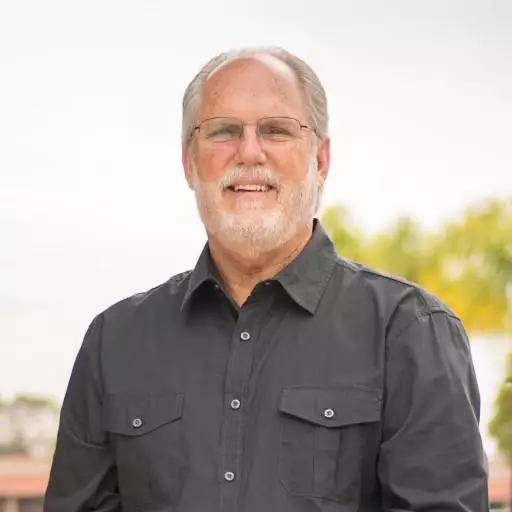
Sound Doctrine
Jeff Johnson
1 Samuel 25 Part 1


We encounter foolish people on a daily basis; whether its on the freeway, at the office; or maybe even waiting in line at the grocery store. Today, we learn how to deal with fools, as God would have us.
Jeff Johnson: God can use flawed people to carry out his will. He did it with David and he can do it with you. Here's Pastor Jeff Johnson.
Good men blow it. They make mistakes. They fall. And yet God does his work of picking them up. And David also had a heart towards God. Even though he failed, God still used him in a tremendous way and you might ask, well why did God do that? After David did so many mistakes, why did God use him?
Because it says that God knew his heart. He knows your heart. That can either be a very scary thing or it can be a very comforting thing, especially when you've blown it as far as your actions, okay? But God knows your heart.
Guest (Male): We encounter foolish people on a daily basis, whether it's on the freeway, at the office, or maybe even waiting in line at the grocery store. Today we learn how to deal with fools as God would have us.
Hello and welcome to our program. Sound Doctrine comes to you from Calvary Chapel Downey. Pastor Jeff Johnson is our teacher and today we're studying 1 Samuel 25, where we encounter a foolish man named Nabal. In fact, that's what Nabal means, fool. We'll see how David deals with a fool. Here's Pastor Jeff Johnson in 1 Samuel 25.
Jeff Johnson: Let's turn in our Bibles this morning to 1 Samuel chapter 25. Give you a little review of where we come from, chapter 24. Remember we learned how to deal with our Sauls, the Sauls in your life, that they are really God's tools to teach us and to bring us to a total dependence upon him. God uses people in our lives to bring us to himself. We saw it with David. Victory comes not by touching our enemy, but through loving our enemy. We saw that also.
Remember, God's whole thing here, what he's trying to do is to keep us from getting into the fruit of the flesh. It's so quick that we jump into the flesh and react to situations, and that natural tendency is there to lash out, to react in the flesh. But God's word says that man's wrath does not bring forth God's righteousness. It never will. It never has. Our getting angry, our getting into it is not going to do any good at all.
Remember also, the Bible reveals everything about its heroes. It doesn't try to hide things, weaknesses or failures. It brings everything out. From here on out, we're going to see David now entering into what many call his backsliding days, as he starts to have these lapses of faith. His weaknesses, his failures are all revealed here. Yes, even men of God who are called by God blow it and make major mistakes.
We see it in the scriptures constantly. We've seen it just in the last few years of TV evangelists and pastors that have made major mistakes and have blown their testimony, and many of them have lost their ministry. Yet praise the Lord, some of them have continued on to serve the Lord. But in a moment it's taken away from them, they fall. It really reveals that no one's perfect. We're not perfect, nobody is.
If you're looking for a man to be perfect, forget it. And don't get your eyes upon a man because that man could fail you. Keep your eyes upon the Lord. He will never fail you. I think there's a lesson there. Now, God uses imperfect forgiven people to do his work. Instead of letting these people that have fallen discourage us, I think we need to be encouraged because if God can use a David, if God can use a Peter, then God certainly can use me.
So let it be an encouragement to you when you see these mighty men of God falling flat on their face because we have our moments too. And yet God uses them. We all know our failures. We all know those times where we seek to get back at somebody for something. We all know that, in fact, I've heard people say, "Well, I don't get back, I get even."
People really get into it. And those times of weakness, we need to realize that God says vengeance is mine, says the Lord. Let me have it, I'll take care of it. David has these times of lapses of faith. In fact, over in Psalms 12:1, he says, "Help Lord, for the godly man ceases. For the faithful fail from among the children of men."
David, understanding that good men blow it, they make mistakes, they fall. And yet God does his work of picking them up. David also had a heart towards God. Even though he failed, God still used him in a tremendous way and you might ask, well why did God do that? After David did so many mistakes, why did God use him?
Because it says that God knew his heart. He knows your heart. That can either be a very scary thing or it can be a very comforting thing, especially when you've blown it as far as your actions, okay? But God knows your heart and he knew David's heart. We've all failed, but thank God we weren't forsaken. Thank God he loves us and he intercedes for us.
Here in chapter 25, he does the same for David. David's humanity is really revealed here in 1 Samuel 25. Let's look at it, verse one. It says, "And Samuel died and all the Israelites were gathered together and lamented him and buried him in his house at Ramah. And David arose and he went down to the wilderness of Paran."
Samuel, who was a major character throughout 1 Samuel, has died. He was a child that was dedicated to the Lord by his mother, prayed for him, interceded for him, and dedicated him to the work of God. He grew up to be a man of God all the days of his life. What an example for us as parents as we dedicate our children and as we lean to that scripture, Proverbs 22:6, "Train up a child in the way he should go, and when he is old he will not depart from it."
Do your best, commit the rest. Our promise by God is that we need to just put ourselves into our kids as best as we can and then trust them to the Lord that they will get that relationship with him on their own and find him. Samuel was a faithful individual in the most apostate time of the priesthood. He was the faithful priest, God's man in the midst of a crooked generation.
He was the last of the judges. He started that right school of the prophets. Just as Paul said to Timothy, "Timothy, raise up men and give to men what I've given to you, that they can give to other men." Samuel did the same thing. He poured himself with the things that God gave to him into other men, and they in turn were mightily used of the Lord. Gad is one of the prophets that came out of Samuel's schools and he ministered to David.
Now I want you to note something here, that they wouldn't listen to Samuel when he was alive. Remember Samuel said to them, "Don't make yourselves a king as the other nations have. Don't make yourselves a man as a king." Did they listen to him? No. They went ahead and made themselves a man as a king, King Saul.
But now that he is died, notice they lament his death. How often this is the way it is. There's no appreciation until they're gone. And then when they're gone, all of a sudden your heart broken and you begin to really appreciate them. Here we see the children of Israel really torn up now that this warrior of faith, this one that sought the Lord, he is going to be missed.
David also runs to Sinai. He's very confused, frustrated at this time. Samuel is dead. It really kind of threw him into a spin-out and he ran off into the wilderness just for a time. And then verse two, "And there was a man in Maon whose possessions were in Carmel. And the man was very great, he was very rich and had a lot of possessions. He had 3,000 sheep and 1,000 goats. And he was shearing his sheep in Carmel."
After David came to his senses, he came back into the area again. In this area, Maon, near Maon there's a village called Carmel. It is not Mount Carmel, which is on the Mediterranean Sea. It's another little small village called Carmel. A rich man was there who was shearing his sheep. During the shearing time there was always a big feast and festivities.
This was a time to be thankful and to share what you have received of the Lord. Now all of the wool is being brought in, so it was a festive time. It was a time like we have at Thanksgiving when you bring all of the friends and relatives over and you feed and feast and thank God for the year and all that he's blessed you with.
In verse three, we are introduced to Nabal. The name of this rich man was Nabal. And the name of his wife, Abigail. And she was a woman of good understanding and of beautiful countenance, but the man was churlish and evil in his doings, and he was of the house of Caleb. The man's name is Nabal.
Now we know that he didn't get this name at birth because no mother would name her child fool. This is the guy's name. He probably got a nickname as he grew up, he was doing foolish things and everybody just eventually called him Nabal, the fool. It was a nickname given to him. Now Abigail is totally different, his wife.
Her name means "joy of the father." She was a woman with brains and looks. That's rare. I married one though. Had them both. I thank God for that. Still has them both. But Nabal, look at this, was a severe man, he was an evil man. You say, how did this happen? How did this nice, good-looking, very smart woman end up with such a nerd?
This guy is just a jerk. How did this happen? I think it was an arranged situation. That happened many times back in those days. The parents had total control of who married who. They'd say when they were little kids, "You would look good with that," and in fact, "They have money. Oh, this is going to work out well."
So you just are going to marry that and they just knew who they were going to marry, no matter how they turned out. They were just arranged. Because of gold, because of money, many entered into a marriage. Now it's not too different today. The parents don't have as much say so, that's for sure.
Still there's people that marry for money and they end up with a jerk. What have you done? A lot of people wonder after they do it, marrying for the wrong reasons. He was from a good lineage. We see here that he was from Caleb's line, and Caleb was a man of faith. Remember Caleb and Joshua, the only two that made it into the promised land?
All the other generation died out. So he was from a good family tree, but he was just a bad apple. There's always that. So we have here Beauty and the Beast married together. Girls, I want you to notice that even though she was married to a jerk, she kept herself up. She was beautiful.
She didn't just let herself go because the guy was churlish and severe and evil and just say, "Well, the guy's not worth it. Man, I'm not going to fix myself up for him." No, she kept herself up. Wives, you need to dress up for your husbands because if you don't dress up, there are other women that are dressing up for him.
Verse four. And David heard in the wilderness that Nabal did shear his sheep. So he figured, oh, this is a good time to go hit this guy up for some help. David sent out ten of the young men. David said unto the young men, "Get you to Carmel and go to Nabal and greet him in my name. And thus shall you say to him that liveth in prosperity, 'Peace or shalom be both to you and shalom be to your house and shalom be to all that you have.'
And now I have heard that thou hast shears. Now thy shepherds which were with us, we hurt them not, neither was there aught missing unto them all the while that they were in Carmel. Ask your young men and they will show you, wherefore let the young men find favor in thine eyes, for we come in a good day. Give, I pray thee, whatsoever cometh to thy hand unto thy servants and to thy son David."
David is actually seeking supplies for his men. Remember, he's out in the wilderness, still running from Saul, needing supplies for his men. I mean, he's got 600 men, that's going to be a lot of supplies. And he's asking and he's saying, "We watched over your sheep. You ask the young men that when we were out there in the wilderness, we protected, we were there.
And the marauders and the wild animals, they didn't get to the sheep. You ask your young shepherd boys. We were always there, and you didn't lose any sheep and we didn't even go in and steal any ourselves. All we're asking for is just a little help right now, a little gift." Now, this wasn't mandatory.
I mean, this wasn't like extortioners that would come in and—I heard some very disturbing news that there's a lot of extortion going on. There's a lot of guys that are packing guns that are going into shopping malls and showing their gun and asking for money. This is happening in these times today because of the great fear and because of the weapons that are going around today.
There's bullies out there and the police are very concerned about this too because this is happening. But this is not what we're looking at here. David is not saying, "Hey, I gave you protection, now it's payout, it's pay time." No. This was something that was just a custom back then, that when you did a good deed and you ask—and I mean, this is a time of thanksgiving.
So they come to Nabal and say, "Hey, Nabal, the time of rejoicing for you and hey, we have some needs. How about just a tip?" It's kind of a tip. It's like you would tip at a restaurant and good service and "thank you very much and here's a tip." So that's what he was asking for, for support.
Verse ten. And Nabal, and here's his answer to his men, David's answer to David's servants and said, "Who is David? And who is the son of Jesse? There be many servants nowadays that break away every man from his master. Shall I then take my bread and my water and my flesh that I have killed for my shears and give it unto men whom I know not whence they be?"
I mean, this guy had a very self-centered I-problem. You can see it here. It's my food, it's my water, you know, give it to you. He was holding on with everything that he had to his things. "I'm not going to give you anything. Who are you?" Well, he knew who he was because he goes, "Thou son—the son of Jesse." He knew who David was.
But he says, "You're just like a slave though, a runaway slave. You took off and all these rogues with you, and you're out there in the wilderness running from the king and I don't know who you are. I'm not going to give you a thing. You're just a rebel." Look at verse 12. So David's young men turned their way and went again and came and told him, told David all those sayings.
Notice David's reaction. David said unto his men, "That's it, gird ye on every man his sword." And they girded on every man his sword. And David girded on his sword, and there went up after David 400 men and 200 abode by the stuff. David lashes out. He gets angry. "This guy doesn't know me, huh? Well, I'll give him something to know me about.
Hey, we'll leave 200 here, but you 400, you're going with me. Let's go, we got a job to do." Wow. This is pretty radical. David takes 400 men to fight one fool. I don't think the odds are very good here. It's true that Nabal was rude. He spoke evil towards David. He embarrassed David in front of his men.
But to take things into his own hands, to attack like David is doing, he's going about it in the wrong way. He's blowing it. What happened to chapter 24? Where's this David that we just recently saw was so patient and so loving and so kind to Saul? Yet here he's ready to just go after his enemy and to destroy him.
We need to be careful because look at what has happened here. David had one victory in chapter 24, which we looked at, which was glorious. We learned a lot from that. But then you go to the next chapter and this little guy—I mean, listen, David was under Saul and he yielded and he was open and he said, "Whatever." And he loved Saul, who was going after him.
But now here comes a guy that's under David, that's smaller than David, that's with a few guys here at this village and he's going after him. One great victory and yet the next day a smaller issue comes up that brings defeat. Do you remember Elijah? Do you remember how he fought the 450 prophets of Baal?
What a victory. God gave him that victory. It was tremendous. And yet he heard from Jezebel, just got a message that there was a contract on his life. And they were going to come after him and kill him. He ran because he just heard there was a contract on his life. He just ran and ran into the wilderness.
And he said, "I want to die. I just want to die." What are you doing Elijah? What, you blowing it? Don't you remember what God, that great victory he gave you? "Yeah, but somebody wants to kill me now." Well what are you afraid of? If God's going to protect you for 450 prophets of Baal, he's going to be with you through this problem.
Remember Peter, strong big fisherman, strong guy. He always carried a sword, didn't he? He showed it a couple times. And yet down there in Caiaphas's area where they took Jesus, a little girl looks up at him and says, "Aren't you one of those Galileans?" And he says, "No, I'm not. Get away little girl."
One little girl, he cowers. Great victories Peter had, but one little girl. Beware of the little foxes. They're the things that pull us down. After a great victory, here comes this little thing. "Come on, it's not that big a deal, David, to blow it like this." But he thinks it is and he totally gets into the flesh.
Do you remember in chapter 23, verse two and four, David prayed to God and asked God what to do with Saul? David's key to victory was always, "Lord, you see the situation. What should I do? Lord, how would you have me react? What would you have me do with this?"
That was his key to victory. But we don't see it here. We just all of a sudden he hears, "Well, that guy's had it. He's toast." And they begin to move in, 400 of them, swords and everything. And there's this one little fool sitting over there. No prayer, no, "Lord, what should I do?" "Oh Lord, I'll handle this guy. I'll just snuff him."
I don't know, do you think it might be because David now has 600 men and a little power corrupts a little bit and a whole lot of power corrupts a whole bunch? Do you think it maybe is going to his head a little bit and saying, "Lord, I can handle this guy. I'll just snuff him. I'll just bring 400—I don't even need 600, 400 guys." Maybe.
But he's really making a mistake. Verse 14. But one of the young men, one of the servants told Abigail, Nabal's wife, saying, "Behold, David sent messengers out of the wilderness to salute our master and he railed on them. But the men were very good to us, and we were not hurt, neither missed we anything as long as we were conversant with them when we were in the fields.
They were a wall unto us both night and day, all the while we were with them keeping the sheep. Now therefore know and consider what thou wilt do. This is serious. For evil is determined against our master and against all of his household, for he is such a son of Belial, he's such a son of the devil, that a man cannot even speak to him."
Nabal's servants knew Nabal was blowing it, but they also knew Nabal, that he was a churlish man. He was an angry guy. He was the kind of guy you'd kind of go up to and go, "Nabal," and he'd, "What?" "Okay, okay, okay." You just didn't want to confront the guy. He'd chew you up. Hateful guy and "what are you talking to me for?"
So they just said, "Let's go to his wife. I mean, he's not even going to listen to us. He's so hard-headed." Let's go to the wife. They told Abigail about the slaughter that was coming. They warned her and said, "You gotta do something." I want you to notice her reaction. It reveals that this woman is an awesome woman of God.
I want you to see her resourcefulness as a woman and what she does immediately. Look at verse 18. "And Abigail made haste, immediately. She took 200 loaves and 200 bottles of wine and five sheep ready dressed and five measures of parched corn and 100 clusters of raisins and 200 cakes of figs, and laid them on asses."
She got all this stuff together in just immediately. Gathered it all up, had all the donkeys loaded with it and ready to go, ready to take action. And then it says, "And she said unto her servants, 'Go on before me, behold I come after you.' But she told not her husband Nabal.
And it was so that as she rode on the donkey, that she came down the covert of the hill in this valley, and behold David and his men came down against her and she met them." Look at her activity first of all. She's like a Martha, isn't she? Busy in the kitchen getting everything together. "Man, I gotta do this."
We need Marthas. Not Marthas that are going to go off and get so busy that they forget the Lord and they forget what's going on and they get a bad attitude. No, we need Marys to sit at Jesus' feet, but we need Marthas to be in the kitchen or you guys wouldn't have got fed yesterday. Thank God for Marthas, right?
Guest (Male): That'll bring to a close today's message from Pastor Jeff Johnson in 1 Samuel 25. It's our prayer that this study has sharpened your understanding of what real faithful service and trust looks like. You're listening to Sound Doctrine and a part of our study in 1 Samuel.
It's our sincere hope that you've been blessed by the words spoken today by Pastor Jeff as we continue verse-by-verse through the book of 1 Samuel. This great Old Testament account contains some of the most practical lessons we can learn about being a believer in Jesus Christ in the 21st century.
If you'd like to hear this study again, you have a few options. First go online to sounddoctrineradio.org, where you'll find a massive archive under messages. We're also on oneplace.com and you can listen wherever you get your podcasts too. Take Sound Doctrine with you wherever you go through the Sound Doctrine Radio app. You can download that today from sounddoctrineradio.org.
And if the Lord is leading you to give to the ministry, first of all, thank you very much. Giving to the ministry is really easy to do at sounddoctrineradio.org by clicking the give tab in the top right-hand corner. Your gifts will be put to good use, helping others around the world build their lives on the sound doctrine contained in God's word.
Join us for another study in 1 Samuel next time we meet for Sound Doctrine with Pastor Jeff. Have a blessed day in the Lord. This program is brought to you by Calvary Chapel Downey.
Featured Offer

Access an extensive archive of messages from Pastor Jeff Johnson
Past Episodes

Featured Offer
Access an extensive archive of messages from Pastor Jeff Johnson
About Sound Doctrine
A weekday radio program featuring the verse by verse Bible teaching of Pastor Jeff Johnson broadcasted throughout the United States and abroad.
About Jeff Johnson
Jeff Johnson is the senior pastor of Calvary Chapel of Downey, California since 1973. The emphasis within his ministry is a verse-by-verse study of the Word of God, giving its full counsel. His influence has experienced a steady and substantial growth over the years with people of all ages. Calvary Chapel of Downey has grown to average weekly attendance of more than 9,000. Teaching seminars, Bible classes, home studies, various training programs, mission outreaches, as well as a Christian Elementary & Jr./Sr. High School, and Bible college meet the needs of this large body. Calvary Chapel's impact is growing from Southern California to virtually around the world. His wife Karyn supports Jeff in his ministry.
Contact Sound Doctrine with Jeff Johnson
Mailing Address
Sound Doctrine Radio
12808 Woodruff Ave.
Downey, CA 90242
Telephone
(800) 353-7553
(KWAVE - 107.9FM)
(562) 803-6501
Southern California 2:00 pm