Oneplace.com

Folk Theology - Answering Spiritual Urban Legends: Our Country Is Beyond Hope

July 5, 2026

Paul Harvey: If I were the devil, if I were the Prince of Darkness, I'd want to engulf the whole world in darkness, and I'd have a third of its real estate and four-fifths of its population, but I wouldn't be happy until I had seized the ripest apple on the tree: the U.S.

So I'd set about however necessary to take over the United States. I'd subvert the churches first. I'd begin with a campaign of whispers. With the wisdom of a serpent, I would whisper to you as I whispered to Eve: "Do as you please."

To the young, I would whisper that the Bible is a myth. I would convince them that man created God instead of the other way around. I would confide that what's bad is good, and what's good is square. And the old, I would teach to pray after me: "Our Father, which art in Washington."

And then I'd get organized. I'd educate authors in how to make lurid literature exciting, so that anything else would appear dull and uninteresting. I'd threaten TV with dirtier movies and vice versa. I'd peddle narcotics to whom I could. I'd sell alcohol to ladies and gentlemen of distinction. I'd tranquilize the rest with pills.

If I were the devil, I would soon have families at war with themselves, churches at war with themselves, and nations at war with themselves, until each in its turn was consumed. And with promises of higher ratings, I'd have mesmerized media fanning the flames.

If I were the devil, I would encourage schools to refine young intellects, but neglect to discipline emotions. Just let those run wild until before you knew it, you'd have to have drug-sniffing dogs and metal detectors at every schoolhouse door.

Within a decade, I'd have prisons overflowing. I'd have judges promoting pornography. Soon I could evict God from the courthouse, then from the schoolhouse, and then from the Houses of Congress. And in His own churches, I would substitute psychology for religion and deify science.

I would lure priests and pastors into misusing boys and girls and church money. If I were the devil, I'd make the symbol of Easter an egg and the symbol of Christmas a bottle. If I were the devil, I'd take from those who have and give to those who wanted, until I had killed the incentive of the ambitious.

And what will you bet? I couldn't get whole states to promote gambling as the way to get rich. I would caution against extremes in hard work, in patriotism, in moral conduct. I would convince the young that marriage is old-fashioned, that swinging is more fun, and that what you see on TV is the way to be.

And of course, I could undress you in public and I could lure you into bed with diseases for which there is no cure. In other words, if I were the devil, I'd just keep right on doing what he's doing.

Jason King: Those words of Paul Harvey from 1965—and I've said this before—but no, that's not AI. That's not fake. That's not something created by technology. Those are his words from 1965, seemingly foretelling a lot of where we live right now.

For the last few weeks, what we've been talking about is this idea that I believe a large part of the reason that we are seeing the world that we see today is because as Christians, as the church, as people who believe in Jesus Christ and are called to follow Jesus Christ, we have begun to let what I would call folk theology shape our understanding of this world, our lives, and the faith.

We've begun to believe spiritual urban legends over what is true. It's subtle how it happens. We're inundated with these things every single day, and over time, if we're not certain or locked down on what the Scriptures actually teach, something that sounds close to what the Scriptures teach becomes good enough. It begins to shape our lives, and then we find ourselves fast-forward 60 years later in a place that we never dreamed that we would be.

Now, I can't help but think, as we've celebrated 250 years as a country yesterday, it was an incredible day of just celebration for me, reflection, and even leading up to it, thinking about goodness. 250 years, that's the longest-standing democracy in history. And here we stand today; we have incredible freedoms and blessings and privileges.

But you know, I read some studies this past week that talked about the prevailing pessimism that is present in most Americans today about the future of our country. I read polls and stories reflecting on the 250th anniversary of our country and the founding of the United States. Over and over, for each article, the state of our country in those people who were both writing the articles and polled in the opinion polls, the outlook was not positive.

For example, Jonathan Allen in a poll conducted by NBC News said this: "Americans have a bleak outlook on the nation's future ahead of its 250th anniversary, with most saying that the US has already seen its best days and a record-low number saying they're extremely proud to be Americans."

For example, immediately following 9/11 in 2001, 70% of folks in America said, "Man, I'm proud to be an American." In 2017, it was an all-time high number of 82% saying they were proud to be Americans. But just this last poll, only 33% of Americans say, "You know what? I'm proud to be an American in this country."

According to this study, as you look at the state of our nation—and that's where we live, so that's what I'm talking about today—confidence in the military, colleges and universities, public schools, the Supreme Court, even local government, the high-tech industry, religious leaders and organizations, federal government, Congress, and the national news media are all at all-time lows. The news media, just in case you were curious, was the lowest at 6% of people that were polled saying, "Man, I've got some complete confidence that they're telling me the truth."

But as I look at our country—and that's part of what this series is about is talking about and digging into what do the Scriptures teach about some of the things that we're living in and what we're wrestling with every single day—our country is divided over significant issues. You're not sure, I'm not sure who to trust at times, and it seems that we grow more divided every day. Largely, it's along political lines.

We seem to be trending in the wrong direction, don't we? It's often said in many of the polls and the articles that I was reading through just reflecting on the 250th anniversary of our country, they're not optimistic that we'll reach another 250 years. It's said that our country is beyond hope, and this belief grows more and more common each day.

So let me ask you—and no, this is not a rah-rah America sermon today, although I do think we have a lot of reasons to be grateful and we'll talk about that—but I want to ask you: what do you believe? Do you believe that our country is beyond hope? You may feel that way. That may be what you're thinking right now because largely in our culture, most people are pessimistic about our day.

But I want to talk to you today that if you do feel that way, what you may have is some folk theology that has slipped into your life. Some myths that might show up in what you believe or what you do that I hope to bust today. Because let me say this, look, if you're in Christ, there is no reason for hopelessness at all. If you're in Christ, look, God is who He says He is, and you can trust Him. Regardless of what the talking heads say, regardless of what the latest poll says, regardless of what social media is feeding you, regardless of what your mama says, God is in control.

So I want to talk to you about some myths that we need to face today that I believe could have slipped into, may have slipped into, what some of us believe today, specifically when it comes to faith in our country. Here's the first myth that needs to be busted today. You and I are told this. The first myth is just go to church. If you want to be a faithful Christian, if you want to do what God has called you to do, if you want to live and operate as a Christian in this country, just go to church.

You stay in your Christian lane, you go to church, and you quietly do your thing. It's all going to work out just fine. But the only thing that we're to do as Christians is to go to church, huddle together, and pray. But how's that working for us?

Francis Schaeffer outlined several years ago how a Judeo-Christian moral consensus has given way in the West, in our country and others similar to us, to the triumph of secular materialism. And he asked Christians this question. He said, "Where have the Bible-believing Christians been in the last 40 years?" By the way, he asked that question in 1982.

Instead of protest and opposition to the advance of what has now become normal to us today that Paul Harvey was warning us about, look, there's been a silence from the people of God. He went on to say that trying to get Christians to care about the issue of human life—specifically in that day, he was talking about the moral issue of abortion and what that looks like—he said it was hard to get Christians and even churches to care.

But I want us to go back to God's Word, and I want to talk to you about a passage of Scripture that maybe you've heard to talk about our country or to spur us to hope and those sorts of things. But do you remember what the Lord said when He appeared to Solomon in the Old Testament after the temple was finished?

Solomon was the son of David, and David was a man after God's own heart. And his son Solomon, God chose to bless. And so Solomon was tasked with building the temple, with building this ornate, just incredible place where people would gather together to worship and to lift up the name of the Lord. It was a central location, and that was where people were to come together and worship.

And so the temple was finished and God appears to Solomon. And He says, "Look, Solomon, I've heard your prayers." You remember Solomon was the one that instead of praying for power or might or resources, he prayed for wisdom. God answered his prayer. He prayed and asked God for help, in particular early in his life. He did lose his way later in his life, but in this moment and leading up to these moments, he has been someone who has prayed and asked God for help.

And God says to him, "Hey, I've heard your prayers. Solomon, there's going to be times when I send hardship your way. There's going to be times when things are rough, when things are difficult, when you're just going to want to give up, when the people of God are going to want to give up." Those times, God said to him, are not without purpose, but He says it matters how you respond in the midst of difficulty.

Now I want to cue this verse that you've probably heard before. 2 Chronicles 7:14. And don't forget what's taking place when God speaks these words to Solomon. He says, "Then if my people who are called by my name will humble themselves and pray and seek my face and turn from their wicked ways," look at what He'll do, "I will hear from heaven and will forgive their sin and restore the land."

Now listen to me very clearly. This is not a verse for America as a nation. This is not for the government or for the public. He's speaking to God's people. To the people who call on the name of the Lord, and by today on this side of the cross, these words are for you and for me.

What does He say to do? He says humble yourselves. Admit your sins. Pray and ask for forgiveness. And then He says turn your heart and your life to the Lord, and then He says change your ways. Now there's this dirty little word that we don't like to talk about today that God is telling Solomon is necessary for His people to see His blessing. You may want to write it down. It's repentance.

Repentance. Repent means to turn and to change from heading one direction, practicing one thing, doing one thing, to turn from that and to turn to God. It means when you sin, when I sin, and we recognize our sin, the conviction of the Holy Spirit, we're faced with the truth of God's Word. We don't look for excuses, rationalizations, or explanations about why we're just born that way or why that helps us medicate ourselves or whatever. It says we repent.

I love what my study Bible says, Life Application Study Bible. It says, "Repentance is more than talk; it's changed behavior." So what God is telling Solomon and what is true for us today as the people of God: how do we see God move in our midst and bring hope? God's not talking about hope comes from our Father which art in Washington. That's where we want to go.

We want to put all of our eggs in that basket and believe that elected officials or politicians or policies or stuff can bring hope. But that's not what God's saying. He's not saying that the upcoming elections for governor or county mayor or school board or whatever positions in our area are ultimately what's going to bring hope. What He's talking about is hope is found when the people of God turn their minds and their hearts and their lives to the face of God.

And we in humility turn to Him and repent and we see God use us and work through us. It doesn't start in Washington or even downtown. It's not written in the code for our country or our county. The blessing of God for our land—God pours His favor on the places where His people live when we are filled with repentance and faith, when we come face to face with our sin.

Do you remember what Paul said? It's not just an Old Testament concept. Look in 2 Corinthians 7:10. The Apostle Paul says, "For the kind of sorrow that God wants us to experience leads us away from sin and results in salvation. There's no regret for that kind of sorrow. But worldly sorrow, which lacks repentance, results in spiritual death."

He's echoing the same truth that God told Solomon in that day. Paul is echoing that and telling us, "Look, man, there's this feeling of sorrow that comes but is not in keeping with repentance, with a life change in us. That leads to death. But life comes when we walk in the type of sorrow that leads to faith."

So we need to be honest with ourselves, church. As the people of God—look, if you're in Christ, I'm talking to you. If you've not made that decision to follow Christ, you need to hear what is true for those of us who are in Christ. But for the people of God, we have often pursued a therapeutic religion that makes us feel better about ourselves and our choices and our sins without dealing with the root issue that we all have, which is our sinfulness.

Sometimes we're looking for something to make us feel better or to validate our choices instead of saying, "God, what do you say about this?" Now to be clear, the verses that I'm reading is not simply a promise for America as a nation. It's not a word to the US that we need to become more Christian as a nation. It's a word to God's people.

To you and to me. And it applies to those of us who live in this country. When times get tough, when sin is rampant, when we're inundated and struggling with temptation and sin in our own lives, when the temperature is turned up as a result of our spiritual apathy, our drifting away from Christ, there's one response that brings the blessing and favor of God. And it's repentance.

You see, as we grow in godliness and in faith, God uses us to impact the people around us. The people see, "Man, she's for real. Dude, he's legit. He's not playing church over here in private and acting some way out in his business or in the public. No, no, no. Man, they're legit." And God uses that when we live by faith and in godliness we walk with the Lord.

But a spiritual apathy and a lack of faith by God's people leads us down a dark road. Did you notice that in that passage in 2 Chronicles 7, that Solomon was being shown a picture that God had brought hardship on a nation because of the spiritual drift and apathy of His people? So the answer for you and me is not just go to church and that takes care of the spiritual stuff. The answer is repentance and faith for you and for me as a way of life.

So can I just ask you? Look, if you just take those words, when was the last time that you humbled yourself? That you repented of sin that God revealed in your life, and you changed what you were doing? Big sin or small sin. When was the last time that took place? He says that is the key to experiencing God's blessing in your life and the lives of those around you.

Do you remember Proverbs 14:34? "Godliness makes a nation great." Again, he's not talking about the elected officials and the people in charge and the people in power. He's talking about God's people. Godliness makes a nation great, but sin is a disgrace to any people. So the answer is not a Christian government. It's God's people living by faith in a falling world, building our lives upon God's Word.

So don't just go to church. Let's be the church. Align your life with this book and let it shape what you do. The second myth that needs to be busted is this: your faith should be private. Your faith should be private. Billy Graham once said that Christians are too often afflicted with moral laryngitis. Think about that.

Why do we do that? Why do we keep quiet when there are significant issues that are in opposition to what God has revealed in His Word? It's because we have been told that in the public arena, in the public sphere, that Christians are to be quiet. You're to keep your faith private and quiet because that is no place in the public arena.

In other words, if your idea originates in faith or has anything to do with the Christian faith, it is said that it cannot be present in the public arena. You stay in your lane, Christian. You keep that to yourself because who are you to impose your belief? Even with some of your places of employment, right? You have a code of ethics or something in your employee handbook or practices that prohibits you from bringing faith into the workplace. Am I right?

You're told, "Hey, you keep that stuff quiet. You don't need to talk about that." It means that any reference to God has been removed or it's faced litigation or pressure to be removed from the public eye. It's said that religion needs to be kept private because of separation of church and state.

But what about separation of church and state? I'm glad you asked. I'd like to give a little history lesson if that's okay. Today we're told by the Supreme Court that the Constitution of the United States draws a high and impregnable wall of separation of church and state, and thus religion has no place in the public arena.

But let's rewind before that 1947 statement by the Supreme Court. Did you know that in our founding documents, which were written by our Founding Fathers—and check this: of our Founding Fathers, nearly half of them had either the equivalent of a seminary or a Bible college education.

Those documents, separation of church and state was intended to restrict the power of the state to redeem and the power of the church to coerce. Two mistakes that had been made in the past. America separated these two and formed a new nation to abide by these principles.

Chuck Colson, who was on President Nixon's staff—you remember his name, he was a part of the Watergate scandal, went to prison, eventually found Christ and spent the rest of his days sharing Christ in the public arena—he said this. He said, "Separation of church and state was intended to protect the church from the domination of the government, not vice-versa."

And Christians were at the forefront of the unique American experiment known as separation of church and state. For they believed that since the state could not transform the human soul, only the Spirit of God could do that, government should neither attempt to establish nor interfere with the church.

But he says this: "To suggest that the purpose of the church and state separation was to keep religion out of politics betrays abysmal ignorance of our history." So since 1947, that's been the word: "Hey, you can't bring faith into the public arena. You have to keep them separate. That's what the Constitution says."

But from the founding of our country until that decision by the Supreme Court, the Constitution functioned as it was intended. The efforts to remove the Ten Commandments, Bible, prayer from the public life began to happen following that decision. But until that point, from the founding of our country until that moment, look, listen to me, it was understood that religion, specifically the Christian faith, was at the center of the founding of the United States of America.

So instead of seeking to silence the church outside the walls of the church building, which is what we're told today, listen to me, the First Amendment was created to protect your ability and mine to speak the truth and to practice the Christian faith clearly and directly in the public arena.

Don't fall to the narrative, church. It's not what our country was built upon. It's a misconstrual of the Constitution to say that you and I have to separate our faith from public life. So don't believe the myth that your faith is private and only practiced at home and at church.

Now many of us fall into the trap of believing that religion's proper role is in one of two politically defined alternatives today. On one side of the aisle, it uses God as a prop for the state. Christianity's a generic religion, God's a vague god who has an American flag pin on his lapel. And the other side says that faith is intensely personal and should be confined to church and home only. And it's said you can be a sincere Christian and advocate for positions clearly contrary to the teachings of Scripture.

Do you see where this is going? When we relegate our faith or are told that our faith is relegated to just behind the closed doors of this building or our home and it's not to be out in practice, we miss not only the founding principles of our country, but we miss a responsibility most importantly that Scripture places on our shoulders to be salt and light to a world that is dying and going to hell.

We Christians should see through what Chuck Colson calls the political illusion. He says we should understand that the real problems of society are at their root moral and spiritual and not political. Now that illusion has a couple of dangers. And this is where we find ourselves. First, as political solutions fail and problems worsen, we become cynical, don't we? And in time, we become alienated from the whole deal. We could care less what's happening in the elections or in policy or in process or in the United States or even our own county.

But the other side of that illusion is it fosters a false security that the government is going to deal with our problems and so we don't even have to bother. So we just huddle together in private, practice our faith in private while the world continues on the path that Paul Harvey told us that it would.

Did you know that less than half of the entire adult population participated by voting in federal elections from 1960 to 2006? And the numbers are even worse now. Christians are just the same. In Hamilton County this past May, did you know that the lowest number of Christians showed up to vote in the last 40 years?

So can I ask you just a question? Who's going to represent and speak for what's right and what's true if it's not the people of God? I want you to think about that. Who's going to speak to, who's going to support or put their eyes and their speech behind the things of God if we're not participating?

I believe you have a responsibility as a Christian to be a part of the process, to vote. You can't control the results of elections, but you can participate. It comes down to stewardship. You trust God and His authority and His rule and control over the world in which we live. You trust the fact that God has placed you in this country, and if you have the ability to vote and to be a part of it, then you need to be a part of the process.

You use the opportunities God gives you. Don't keep your faith private believing that your participation doesn't matter. God has given you the opportunity to be a part of it. And I believe that means if you're able, you need to be participating in the elections. But also I think you need to be spiritually discerning with who you vote for.

Because this is where, again, we keep our faith private and we don't let it affect the choices that we make sometimes. I believe the framework you need to use for decisions on who do you vote for, or the way you vote on issues, or the who and what you support, I believe it's not your family's party necessarily, or it's not your voting history even. It's not who all your friends are voting for, or who talks the best game or has the slickest campaign.

Can I give you the lenses through which you should view every single decision, not just in your voting history, but in life? You see, the Word teaches us that by the power of the Holy Spirit, you and I have the ability to spiritually discern. And you and I need to use those lenses and we need to stand on what is right and true over what is appealing and slick. And we need to speak on behalf of what is right and true and reflects the Word of God in private and in public.

And you stand on and support what is right and what is true. Now we know that it gets complicated, right? Because different people feel certain ways and different ways, but can we go back to the truth? Don't be influenced by folk theology or what everybody says or what everybody's doing. Be influenced by the Word of God.

Our country's divided about issues such as the right to life, or sexuality and gender, or even the border and immigration. But the Bible is not divided. The Bible is clear. And I appreciate that some people want to twist and turn things to say that the Bible's never intended, but the orthodox Christian ethic that has been established in Jesus' day and carried to today has not been redefined to fit our culture.

No matter how hard people try to redefine it or water it down, the Bible is very clear. I believe that means you need to practice your faith by voting in alignment with what the Scriptures teach. Look, your faith is not to be practiced in private and then the rest of your life takes place. Please hear my heart. You don't separate your voting or your participation in the public world from your faith. So don't believe the myth that your faith is private and that you can contradict what you believe with your support in public.

So can I give you some practical ways that you can live out your faith in the public sphere? The first thing you need to do is pray. Look, pray. I'm not saying pray that your candidate gets elected or pray that things go how you would like for them to go, but pray that God would reveal to you, that He would reveal to us, where we've been blinded by this political illusion, where we've let folk theology or some urban legend shape what we believe rather than God's Word.

Pray for one another. Pray for the people in your life that don't know Jesus. Pray for people who are in office. Pray for God's power and movement to be more evident among us as the church. You see, we believe that God answers prayer and there's always hope when God is at work.

I think you need to learn. You need to educate yourself. Be informed. Learn about the issues that are facing our county, our state, our country. Learn about the people that are running for office. Learn about the things that are going on in the federal government. Please don't put your head in the sand, but also don't believe everything you see in the news media.

Learn for yourself. Don't be led by your political party lines, the politicians and news media narrative. Church, I want to keep saying it. Let this book shape all that you do. Let this book and the truth of God's Word be the lenses through which you evaluate, participate, and speak in private and in public. And you stand on and support what is right and what is true.

I think the final way that I would say to you you can be a part of what in the public arena is to participate. I think you need to speak up. Go to hearings, go to meetings, share what your perspective is. I think you need to vote. Don't acquiesce to the choices you're told you have. You choose faith first. Let this book shape what you do. Don't be silent. Don't be silent.

Seek to use opportunities that you're given for the gospel, whether that's at work, whether that's in your home, whether that's in your neighborhood, whether that's through voting, whatever it is, you stand upon what's right and true and be who you're called to be.

Can I say a word to some of you today? Some of you as you're following Christ, you need to be a part of running for office. I believe that. Man, God maybe is leading you to do that. You need to do it. You need to serve in the civic arena in other capacities. Serve on a board, be a part of the PTA, be a part of whatever it is that you have. Don't sit back and think, "Well, somebody else is going to do it. I don't know."

God can and will use you if you are a believer and He leads you to become involved in the process. I believe you should step into it if God opens a door. Think about it: in the Old Testament, Daniel, Mordecai, Esther, and Joseph, they all served in the civic arena. In the New Testament, Jesus commends the faith of the Roman official. Do you remember that? In Matthew chapter 8. He didn't tell him to get out of government.

Zacchaeus, he was a tax collector. He didn't tell him to get out of the IRS. He said, "No, you go be godly and you represent Christ. You make right whatever you've done wrong, and you live a godly life from here forward." Don't keep your faith private. God may be leading some of you to take a step to be more public in your faith, and you need to do it.

The third myth that I want to bust today is this: it's the belief and the myth that the best days are behind us. The best days are behind us. Now, especially if you've been around this world for a while, you may remember a simpler time. And it's easy to begin to believe that the best days are in our rearview mirror.

If you believe, though, that the best days are behind you and that it's not going to do anything but get worse from here on out, I do think you're missing the reality of who God is and the fact that He's still in charge. Look at what Psalm 103:19 says. "The Lord has made the heavens His throne; from there He rules over everything."

The Lord has made it all and He rules actively. He is sitting, ruling in control over everything that He has created. Make no mistake, God is still on His throne and He still rules over your life and mine, over our country, and over every other country in the world as well.

And so can I say this? As a result of that truth that God still is on His throne and He's still in control and He still is who He says He is, can I just say that we need to be grateful for our country? God has chosen to bless you. You were able to choose to come to church today, unless you're a kid and your parents brought you here, right?

But your parents made a choice to bring you to church today. You had that choice. God's chosen to bless our country. He's blessed other countries too, but He has chosen to bless our country, and I don't want you to overlook that today. Let's be grateful for the ways that God has blessed us in the past, the opportunities He's given us in the present, and look forward to the hope of the future that He's promised will become reality.

I love what Bob Russell says. He wrote a series of blog posts over the last few weeks, and he says this. He says, "We have so much to be thankful for and we can learn to focus on those blessings given to us by God and be grateful for what He's given to us, or we can focus on the 5% that's wrong and be miserable our entire lives." I would throw in there that that's also a really good life principle.

He goes on to say that as we celebrate our nation's 250th birthday, it's not Christian nationalism to enthusiastically thank God for His generosity. "Christians should not worship a country," he says, "but I do believe it's rank ingratitude to ignore His blessings and scoff at patriotism. Many Americans," he says, "have an entitlement problem and an ingratitude problem, and that spirit is spreading like a plague."

So could we frame our perspective through the words of Scripture? Philippians 4:8 and 9 says this—I've shared this many times, such a powerful passage. It says, "And now, dear brothers and sisters, one final thing. Fix your thoughts on what is true and honorable and right and pure and lovely and admirable. Think about things that are excellent and worthy of praise. Keep putting into practice all that you've learned and received from me—everything you heard from me and saw me doing. Then the God of peace will be with you."

Look, that's a prescription for believing that the best days are in the past and there is no hope for our country: to think on the things that are true and worthy of praise and put these things into practice. Live out the faith. And he says, "Then the God of peace, the God who created all things, still sits on His throne—He'll be with you."

Sounds pretty similar to what God told Solomon a long time ago, doesn't it? You keep the main thing the main thing, and I'll bless you. You see, the hope for our country is not for us to outvote all non-Christians and make America a Christian nation by our vote. The hope for our country is Jesus Christ.

And as His people, to help that hope become realized, you are salt and light in a world that desperately needs it. So church, we can't sit on our hands or with our head in the sand thinking, "Oh, it's just going to go away if we go to church. It's just going to get better." No, no, no. That's the reason we are where we are right now.

God is calling us not to disengage or to believe that the political process or achievements are the answer. You're not just a voting block. You are the people of God who are called to be salt and light. And so the hope for our country is not to overhaul the Constitution. It's not to figure out how do we change our form of government or how do we do this or do that and bring reform or even a new set of politicians. Our hope is in Jesus Christ and in His followers—you and me choosing to live by faith.

And so don't believe the hype for a moment that our country is beyond hope. Because the future is filled with hope for all that call on the name of Christ. And yes, there are some threats and challenges that are very significant that we face as a country. Many other countries face similar or even more significant issues.

But let's not forget that we serve and worship a God who sovereignly orders all things in His creation. And He's actively ruling not only over your life and mine, not only over our country, but over all of His creation. And because of that, because of who He is—again, not through the folk theology that we're fed today but through the truth of His Word—we can be grateful and we can live the life of faith that He's called us to, because the best is yet to come.

I love the story—I was reminded of it this week by Bob Russell, but he told a story of a farmer. And I've heard about this story before; maybe you've heard it before. But for some reason, this farmer got to this place with his farm that he started to criticize everything about the plot of land that he had lived on for so long.

So he decided, "You know what? I've had enough of this place. I'm going to list it with a realtor, I'm going to sell it, and I'm going to move." So he listed the farm and he started a search for a new property. And in the middle of this search, about a week later, the realtor called him and said, "Hey, I need to just double-check the ad with you that we're going to put in the paper to advertise your farm. So let me read you what I have."

And the realtor starts to read about the ideal location, the lush pasture, plenty of water for the farm, the beautiful lake, the barns, and the farmhouse that was a classic home. And when the realtor finished, the farmer said, "Can you read that to me one more time?" After he heard it a second time, he said, "You know what? Changed my mind. I'm not going to sell. I've been looking for this place my whole life."

Can I say to us, look, we're a lot like that farmer. We're looking around at all the stuff around us and we think, "Oh my gosh, what's the use?" It needs to change, this needs to happen. The best place on earth is right in front of us. And often, even as the people of God, we're too busy complaining to be grateful.

And so today you may have been told our country's without hope. Your faith—you just need to go to church, keep everything kind of in private and let all the other people handle the public stuff. The best days, they're behind us, not in front of us. But can you hear the Word of Scripture? Anytime God is involved, the best is always yet to come.

And He invites you as a person, as a man or a woman, a young man or young woman today, to experience the power of His presence in your life. And that is your hope; it's our hope. The power of God at work. Let's pray.

This transcript is provided as a written companion to the original message and may contain inaccuracies or transcription errors. For complete context and clarity, please refer to the original audio recording. Time-sensitive references or promotional details may be outdated. This material is intended for personal use and informational purposes only.

Featured Offer

21 Days of Prayer - Free Download

For the next 21 Days, we are going to pray together that God will move in power in the next generation…from birth through college and beyond. You can use this tool to pray for your kids, grandkids, family members and others in our church and community in the next generation. 

Past Episodes

Loading...
*
A
B
E
F
G
H
L
M
P
R
S
T
W

About Bayside Baptist Church

Bayside is a growing church located in the Chattanooga, Tennessee area. Our vision is to become a movement of God seeing lives changed in Chattanooga and beyond. Our mission is to help people discover a life changing walk with Jesus. We are called to make disciples - helping people find the hope that’s within us, and guiding people to learn how to live the Christ life. You’ll find practical, life-application teaching from the scriptures to help you become all that God has created you to be and impact the world around you.

About Jason King

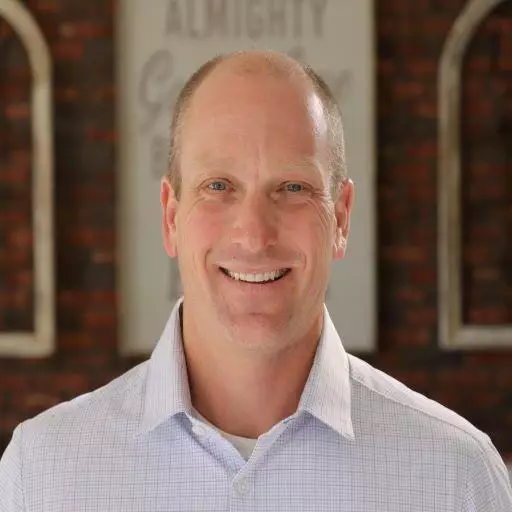
Jason is originally from Mississippi, and has been leading Bayside since 2020. He believes that rooting your life in God’s word is the key to your future. His down-to-earth, life-application style teaching helps you connect the dots between your world and the Bible, and to begin living your faith like never before. He’s driven by a sense of urgency to help you to make a difference in the people around you, and to do it with authenticity.

Contact Bayside Baptist Church with Jason King

Bayside Baptist Church
6100 Hwy 58
Harrison, TN 37341

423.344.8327