

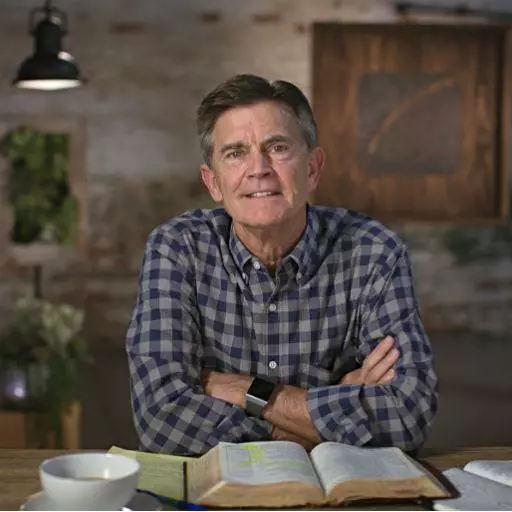
How Our Jobs Can Destroy Our Relationships, Part 1


Is it possible that a “better” job could actually be a bad thing for you, your family, your relationships? Chip examines what the Bible has to say about jobs, relationships, and being upwardly mobile.
Resources
Connect
- 888-333-6003
- Website
- Chip Ingram App
- YouTube
Partner With Us
- Donate Online
- 888-333-6003
Dave Drouilly: Today on Living on the Edge with Chip Ingram.
Chip Ingram: Many of you right now are in the midst of pondering a new opportunity in your job. Maybe it's a new job that you need. Maybe you got laid off. Before you change jobs or accept the job that you desperately need, listen to today.
Dave Drouilly: I'm Dave Drouilly and this is Living on the Edge with Chip Ingram. Right now, we're in a series called Building Authentic Community. How to lift up those you love. And today, Chip tells the true story of a man named Henry whose life was transformed by a small church until a bigger job offer pulled his whole family away from everything and everyone that had been helping them heal. From James chapter 4, Chip shows us the two false assumptions behind almost every decision we make about work and gives us clear biblical guidance on how to actually get it right.
Well, here's Chip with today's message titled How Our Jobs Can Destroy Our Relationships.
Chip Ingram: Five lies that ruin relationships. We are on lie number three. How our jobs can destroy our relationships. And I got to tell you, uh it's a miracle story. This is a miracle story. It is a true story and it has a sad sad ending and makes an amazing point. Uh in the very first pastor in Texas in a very small rural town, about 4,500 people, I didn't even have a stop light when we got there. And we were in this little tiny white building about 10 miles outside of town. And we started with about 35 people and God blessed and little by little we grew and a real warm group.
And we had probably grown to a couple hundred people and uh had remodeled a old high school and and then a a fellow came into town. His name was Henry. And Henry was next door neighbors to uh uh seminary student that went to our church and he began to build a relationship with Henry and he said, you know, I think God really wants to reach Henry. And so he said, would you go over with me and let's let 's meet Henry. I've talked to him a couple times out in the yard, but let's just kind of visit.
And so I remember coming to the door and knocking on it. Drapes closed. I mean, it's Texas, three or four in the afternoon, 102 degrees, bright, hot. And I mean the drapes are closed and I'm thinking no one's here and so we knock. And I look at him. He looks at me. I guess they're not home and well, there's their car and so we knock again. To make a very long story short, finally we hear people talking, so someone's in there. It's like why won't they answer the door? And finally someone opens the door and we walk in.
I mean it's it's dark. I mean there's like one little light and it's I mean you talk about depressing. And we walked in and we talked a little bit, made a relationship. He was very closed socially. His wife, I don't think said an entire word. Some kids kind of came out and looked behind. And that was the beginning of a miracle in Henry's life. And And this is with permission. Henry Henry is a very good friend. Henry and his wife both came from as dysfunctional, difficult, abusive backgrounds as your mind can ever imagine. So sad.
And so in great need, they met each other. And when people who come from horrendous backgrounds meet one another and get married apart from the Lord Jesus, they just reproduce exactly what they came out of. And I I wish I could tell you all that happened, but this is one of those great stories. The power of the body of Christ. Uh my seminary friend loved him and communicated with him. It took time. Little by little, they started coming to church. And you can imagine with those backgrounds, they didn't have like the greatest social skills, you know, walk you know, walking in ways where they sent all the messages that you know, you say, you know, let's not get around those people.
They got problems. And this church didn't do that. They loved them. And people began to put their arms around his wife and care for her and begin to invest in the kids. And Henry, though you know you know people can come from terrible backgrounds, Henry was really smart. And he worked at a one of these places that where they drill and die. Uh but man, he could fix anything. And pretty soon we had him working around the church and pretty soon he's involved with some men and his kids had been through really difficult difficult times and you just watched them come out of their shells.
This was like awesome. And Henry actually came to the point where there was a little house and through the some help of some people, he actually bought his own first house and he got involved in the life of the church. And I mean it it was like as clear a picture from darkness to light as I've ever seen in my life. And then um as Henry began to grow and get into the scriptures and lead his family and the drapes were open and they they they built relationships and it it was just like it was like seeing a dead flower and then watching it just totally replanted and and then start to produce fruit and and and then Henry got a um a job offer because you know when God does things in your heart and life and things really get going better, well, pretty soon Henry's changing and he has more confidence and he is a very very bright guy.
And pretty soon they have him doing other things and he gets this juicy job offer uh two states away. And it means more money. It means uh more actually some people reporting to Henry. It means I mean this is like whoa. And um so Henry prays about it about a 30 seconds and decides that this is what he's going to do and he's heading out. And so we we stopped and it was one of those times where I mean you never want to thwart someone's you know good fortune and that God may really be working, but you know, I just sat down with Henry and he was now in a small group of men and we said, Henry, you you need to think this through.
What do you mean? So you need to think this through. Um what do you think this is going to do? It's been three and a half years. Your wife now has a friend for the first time in her life. Uh your daughter is in a school and some people are actually taking care of it. Uh your older daughter who's been a recluse is beginning now to open up and build some friendships and your son's doing well. You actually own a house and you know are making progress. And I said, Henry, you know you got a church that loves you.
And I just think before you say yes to this job, you ought to go check this out and and is there a church that is going to accept you and love you and is there going to be education for your family? In other words, maybe a great job is not the only basis for relocating your whole family. He said, oh why don't you know it oh it'll all be fine. And he um took the job. And about four months later, things did not work out and his family began to get back in the very dysfunctions that they'd experienced before.
Uh within a year, he had a very difficult time with his older daughter. Um regression occurred with almost everyone. And about two years later, I remember my wife getting a call at home. Henry and his family were homeless and living in their station wagon. And he was in some state calling because he just had this connection with our family and would say, hey, I'm really struggling and I know you guys pray for us. Here's our situation. Could you? And we're going to learn that sometimes we can make decisions about a job that might be a great job, but they can destroy our relationships.
There are some upwardly mobile vocational opportunities that because of the culture that we live in, we can automatically assume I have this kind of job. Now I could have this kind of job or this kind of opportunity and we automatically do it. And the only thing we think about is the value of the job and the perks and the benefits. And sometimes we don't consider that we can actually make bad decisions about our jobs that ruin our relationships. And so let's let's pick it up together. What we're going to do is is we're going to get to listen in.
James is going to uh allow us to be like little uh um mouse in the corner or a microphone in the room in James chapter 4 verses 13 to 17. And there's a strategic planning meeting going on. And it says, come now. You who say today or tomorrow we shall go to such and such a city and spend a year there and engage in business and make a profit. He has a very thorough business plan. And so you say to yourself, well, what's the problem? James is going to say inspired by the Holy Spirit, here's the problem.
The business plan excluded God. The business plan excluded God. James is not prohibiting planning. The Bible is full of admonition that we should plan. He's not criticizing making a profit. The Bible is really clear. You know, be shrewd, be wise with your money. What he's criticizing is this. Arrogant presumption or leaving God out of our plans. Notice what it says in Proverbs 16:3. Commit to the Lord whatever you do and your plans will succeed. Or Proverbs 16:9. In his heart, a man plans his course, but the Lord determines his steps. So it raises a question.
Why is planning apart from God so dangerous? And in verse 14, James is going to teach us exactly why planning apart from God is so dangerous. Pick it up as I read verse 14. You do not even know what will happen tomorrow. And then he asks a question. A big question. And notice he doesn't ask about his job or his work. He says, what is your life? What is your life? He answers four. You are a mist that appears for a little while and then vanishes. See the biblical answer to what is your life is you are a shadow.
You are a vapor. The word for mist here was fog or smoke. It's the idea of fog coming up. It burns off by 10:00 a.m. I mean it's here and it's gone. Your life is transitory. Your life is short. Your life is unpredictable. Your life is way different than you really think.
Dave Drouilly: You're listening to Living on the Edge with Chip Ingram. We'll pick the message back up in just a moment. But did you know you can actually watch Chip teach, not just hear him? Head on over to YouTube, search Living on the Edge with Chip Ingram and hit subscribe. You'll find full video teachings there on marriage, parenting, leadership, and a lot more. Ready to watch whenever it works for your schedule. Well, now here's Chip with the rest of today's message.
Chip Ingram: And out of this, what you see is there's two false assumptions to planning apart from God. False assumption number one is that life is predictable. The truth is life is uh very unpredictable and that we don't know what's going to happen. False assumption number one of why it's so dangerous to plan apart from God is that we think life is predictable. Life is not predictable. The only guarantee is change. So you got to ask God, what do you want me to do? False assumption number two is that life is long. Not only is it predictable, it's going to stay the way it is, but I'm going to live a long time.
We unconsciously think other people have car wrecks, plane crashes, and cancer, unexplained tragedy. I'm going to live long, so I have plenty of time to do whatever really is important later. Remember the parable Jesus told in Luke chapter 12 of the man who prosperity got so big. He said, you know, the only thing I can figure out to do is I'm going to tear down all these barns and I'm going to big bigger and bigger bigger barns. I'm going to store and store and store and hoard and hoard and hoard and I'm going to eat, drink, and be merry because wow, I've got it made.
I'm going to quote live forever emotionally. That's how they think. And remember how Jesus ends that parable? You fool. You fool. This very night, your life will be required of you. Life is short. And when we make job decisions apart from God and we somehow think that the economy and things and people and structures are going to stay the same and somehow that we're this exception and that our life is going to be whatever the table is and you know, 70 for most people, 80 for some. I bet I'm an 84, you know. I'm the big exception.
And we never intellectually do that, but we act as though that is true. He says you get in trouble. I remember my friend, I told you I was going to tell you a story cuz at the time I was a very young pastor and although it was good news for the church, I thought the guy was nuts. Bill Carter. Uh he was in his mid 50s at the time and he was at a some sort of group that builds banks all over America. And at the present time, he had all the engineering responsibility east of the Mississippi.
And an amazing guy actually self-taught in he he had ended up with degrees in electrical and mechanical and about three or four different types of engineering. And he was in charge of all the heating and air conditioning systems, all these banks that got built. And uh so he did such a good job, they wanted to give him all of America, relocate him to the home office. Huge salary increased, tremendous number of people reporting to him. I mean four or five years in that job, I mean he's set set set for life. And so they gave him this opportunity and uh he came to me and as the pastor and he taught me not only how to be a pastor, but he taught me how leaders respond to pastors.
And he said, I want you to know that this opportunity's come and I feel like he had these little phrases. He said, I feel like I need to take it before the Lord. And so I got a business trip. Well, I have three or four days. I can fast. I'm going to be taking it before the Lord and would you pray with me, Chip? And then when I get back and I'll talk to K and we'll we'll discern the will of God and I'll let you know because I know it's a critical time in the life of the church.
And you know, first of all, I'm not around a lot of people who fast for three and four days about big decisions who really get, you know, it's not about me. It 's not about the job. It's about what does God want me to do. And so he does that and then he comes back and he said um and he this was another one of those little phrases. He said, Chip, the Lord hasn't released me. And I 'm thinking you know, I I don't want to be stupid like uh like uh he's got to hold on to you.
He said, no, he hasn't released me. And I said, well, he hasn't released you from what? And he looked at me like, hey, dummy, but was kind. He said, I signed up to be an elder here and I have a three-year term and we'll pray that through and ask about what the next term would be. And as I got before the Lord, he said my work's not done here. And the average Christian I know it would be, hey, you know, sorry guys, you know, I know the three-year term I was supposed to do this or would you take me off the hook or and I'm not saying that there might be times where God might want to move people, but here's a guy who takes his spiritual responsibility as being more important than the juiciest job opportunity in the world.
And he said, the Lord told me my my work's not done here. Little did he know I I never dreamed you know I would leave that little church in Texas and end up in California and that just in the sovereignty of God, you know, he taught me. I mean we I did evangelism with him. I did counseling with him. I learned to speak the truth and love with him. I I saw him weep for lost people that he really cared about. I I saw him take me to task as I got influenced by people and challenged me to have courage and speak the truth and love.
I mean this guy was like a mentor. And And I think God kept him around for me cuz God had a plan. I didn't know what it was, but those kind of values are the difference between pastors that make a difference and pastors that don't. And so I ended up going to California later and God chose to bless that into this really amazing church. And then he has me doing what I'm doing now. And I thought where would I be without Bill Carter? And Bill fulfilled his and then are you ready? He suddenly and tragically died of a heart attack, massive heart attack at age 58.
So all that extra money he would have made and all those people and all that position were not going to do anything in his glory years and retirement, were they? He just listened to the voice of God. Now please don't hear in any way we're not saying upwardly mobile opportunities are not the will of God. I just think especially in American culture, we unconsciously think, don't we? More money, more territory, bigger salary, lower housing cost, more opportunity, nicer car, company car, stock options. I I mean it's almost like why pray about this one? God I mean God wants me to be happy, right?
Hedonism. God's laying this in my lap. Could it be? Could it be that we need to ask, what would this do to my spiritual life? What would this do to my family? Lay all those out and pray all those through. God may say, move from here to here. But what James is saying is a lot of believers in that day just saw whoa, dollar signs, opportunity, let's go. And they assumed that things would be as they were predictable and they assumed that they were going to live a long time. And he says, you're wrong on both counts.
Your life is a vapor. Your life is a mist. You should be like Psalm 90. Lord, teach me to number my days. Lord, help me to present before you a a heart of wisdom. Lord, show me what your will is. And so again, I love James. Inspired by the Spirit, he now turns after saying, wait a minute and tells us the false assumptions. Now he shifts gears and says, well, if life is uncertain, if life is short, how should you go about making wise decisions with regard to work? And then in the next few verses verses 15 to 17, he's going to give us a clear explanation.
Follow along as I read. How do we make good decisions about our work? He says, okay, in contrast, instead literally the word is anti. You know, instead or anti over against what you just heard, you ought to say, if it's the Lord's will, we will live and do this or do that. As it is, you boast and you brag and all such boasting is evil. Anyone then who knows the good he ought to do and doesn't do it, he sins. I think out of this brief three verses, God gives us four very clear axiomatic ways to make good decisions about work.
Number one, in making decisions about work. Number one, make God's will the foundation for all decision making. Just you know, who knows the future? God does. Who has your best interest in mind? God does. That's the part I think we don't believe. Would you jot in your notes Psalm 84:11? This is like one of my most I love this verse verses. The Lord God is a sun and a shield. The Lord gives grace and glory. No good thing will he withhold from those who walk uprightly. God's for he you know what? He's not trying to keep you from a good job with lots of money and all the things you think you're going to deliver.
The Lord God is a sun, unlimited resources. The Lord is a shield, your protector. The Lord gives grace. In other words, stuff you don't deserve. The Lord gives glory. He wants to expand and multiply and be good to you. He's your father. No good thing will he withhold from those who walk uprightly. When you get that, then you say, Lord, you know, I think a lot of us are afraid to pray. We're going to say, Lord, do you want me to take this juicy wonderful opportunity and I'm afraid you're going to say no, so uh sorry, I didn't have time to hear you.
Because we think we know what's best for us. Who knows if things are going to stay the same? Who knows what's going to change? Who knows what's best for us? Who knows what transitions our daughter, our son, our wives are going to go through? Who knows that maybe if I'm single, maybe I'm leaving and God has someone in this place instead of that? I don't know, but God does. I came that you might have life, Jesus said, and have it abundantly. So make God's will. You know, you say, God, I want your will more than any of my desires.
Second, I think under this is that uh commit and say to yourself, regardless of the circumstances and the seeming can't miss opportunity, I am going to do whatever you say. There's got to be a commitment of the heart prior to the decision. Uh I was doing a little research and found out that in the old days on uh believers would write letters to one another. And at the end of the letter, they would just put in the olden days D period V period. Anybody know what that means? It's a Latin phrase. And they didn't mean it as a cliché.
You know what it meant? It meant if the Lord wills. D O volente.
Dave Drouilly: You're listening to Living on the Edge with Chip Ingram and a message titled How Our Jobs Can Destroy Our Relationships. We're in a series called Building Authentic Community. And if you missed any parts so far, be sure to visit our website livingontheedge.org. And if you like every message delivered the moment it's released, subscribe to the Living on the Edge podcast wherever you listen. Or to hear Chip's sermons in their full original format, subscribe to the Chip Ingram Sermon podcast. Henry's story is a hard reminder that even a good decision can cost us the relationships that matter most if love isn't part of the equation.
And that's exactly why Chip wrote I Choose Love, a clear practical case for making love a decision, not an afterthought in every choice we make and every relationship we build. Here's an idea. Pick up a copy for yourself and a second copy for someone you know, then invite them to read it with you and walk through it together and watch how God can use that kind of discipleship to transform both of you and ripple out into everyone your life's touch. Get your copies of I Choose Love at a special price today at livingontheedge.org/offers. This Bible teaching only reaches the next listener because someone like you decided it was worth funding.
Give whatever you're able today and help carry this kind of practical transformative teaching into the next home, car, or workplace that needs it. Go online to livingontheedge.org or give us a call at 888-333-6003. You can also send your gift by mail to Living on the Edge, P.O. Box 3007, Suwanee, Georgia 30024. And now here's Chip.
Chip Ingram: In the passage today, what we saw was that we make bad decisions because we have bad thinking because behind our bad thinking we have false presuppositions or or literally bad theology. We unconsciously think that life is predictable. We unconsciously believe that life is long. And what God is saying, you need to live wisely and you need to live with the end in mind. Uh I with permission shared that story about Henry and it's a tragic one, but I don't want to see that repeated across America. You don't have to have that happen to you, but the long-term solution is being a Christian that lives like a Christian.
We call it an R12 Christian. May I encourage you to begin a discipleship pathway of understanding what it looks like to surrender to God, what it looks like to live separate from the world, how to discover a sober self-assessment, who God made you and what your strengths and weaknesses are and and then how to respond and be involved in an authentic community where you get strength and power. When you become that kind of Christian, I will tell you this, you'll make great decisions. Dig deep and draw near to God and here's the promise. He'll draw near to you.
You may two years from now look back and you will rejoice at what God has done in you and through you. So take that first step right now today.
Dave Drouilly: Join us next time when Chip continues our series on Building Authentic Community right here on Living on the Edge. Today's program is produced and sponsored by Living on the Edge.
Featured Offer

Build Lasting Connection
Love is a decision, not a feeling. Get practical tools to love your family, friends, and neighbors well.
Past Episodes

Featured Offer
Build Lasting Connection
Love is a decision, not a feeling. Get practical tools to love your family, friends, and neighbors well.
About Living on the Edge
About Chip Ingram
Chip Ingram's passion is to help Christians really live like Christians. As a pastor, author, coach and teacher for more than twenty-five years, Chip has helped people around the world break out of spiritual ruts and live out God's purpose for their lives.
Chip is the author of eleven books and reaches more than one million people each week through online, radio and television outlets worldwide. Chip serves as CEO and Teaching Pastor of Living on the Edge, an international teaching and discipleship ministry. Chip and his wife, Theresa, have four children and twelve grandchildren.
Contact Living on the Edge with Chip Ingram
info@lote.org
http://livingontheedge.org/
Mailing Address
Living on the Edge
PO Box 3007
Suwanee, GA 30024
(888) 333-6003