

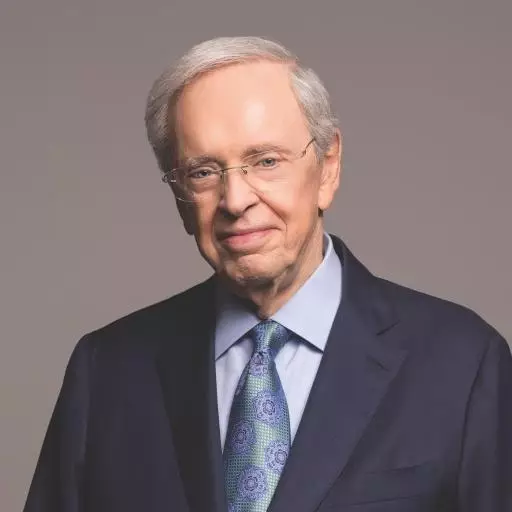
Requirements for the Ministry of Intercession - Part 2


One of the most powerful and influential acts we can accomplish for someone else is to intercede on their behalf in God’s presence. Dr. Stanley teaches us the true meaning of the ministry of intercession on behalf of others. Learn how to bring petitions to God with increasing confidence and faith.
Dr. Charles Stanley: Intercession means, Father, I'm willing as an advocate. I'm coming in the name of Jesus Christ to plead their case that you would open their mind and open their heart and convey to them the truth and help them to see the danger they're facing. You are an advocate at the throne of almighty God in behalf of someone who often times does not even see what they're going through.
Guest (Male): People often talk about how desperately things in this world need to change, but most avoid taking much personal action. Today's edition of In Touch, the teaching ministry of Dr. Charles Stanley speaks directly to Christians about the power of prayer. Remind yourself of the immense privilege of interceding on behalf of the people right beside you and beyond. Let's listen in to Dr. Stanley's message.
Dr. Charles Stanley: John Wesley once said, give me a hundred men, a hundred men who fear nothing but sin, nobody but God. He says I care not a straw whether they be laymen or preachers. Their prayers will shake the gates of hell. As you and I look into history and see how God has used many great servants, all of these servants had behind them someone who was an intercessor. Many people know Charles G. Finney, who was a great preacher, went up and down these colonies preaching the gospel of Jesus Christ. Hundreds of thousands of people were saved. Many people know him by name as a great evangelist.
He was a converted lawyer. What people do not understand is that all the time Charles G. Finney was standing up in public preaching, there was a man by the name of Father Nash, who was tucked away in his room praying and pleading for the power of God to come upon Charles G. Finney and to open the hearts of those who were listening that multitudes of people might be saved. Charles Spurgeon was one of the greatest preachers the world will ever know. And when he preached, multitudes of people were saved and often times people would ask him and often times give him the credit for his eloquence and his biblical knowledge and he would often times take them downstairs under the sanctuary to show them where multitudes of people were had assembled together, who would pray all during the time he was preaching.
Mary Queen of Scots said, I fear John Knox's prayers more than I fear 10,000 soldiers. She understood the power of one saint on his knees before almighty God, pleading the power of God, interceding in behalf of those for whom he was concerned. God does not give everybody a life ministry of intercession. He does call some to the ministry of intercession, but all of us are to be intercessors and we need to understand some basic principles if we're going to intercede. It's one thing simply to hop down and pray, oh Lord, would you please bless so and so?
You know that the trouble they're in and Lord, I don't know what to do for them. Would you bless them in Jesus' name? That's not intercession. I want to share with you what's involved in intercession, but to remind you, God may be calling you to the ministry of intercession. This I know, he is calling you to intercede as a believer for those whom you know are not saved and specifically and particular people God will place upon your heart. So I want to give you the requirements number one. The first one is awareness. If you're going to intercede for others, then you must be willing for the Holy Spirit to make you sensitive to the needs of that person, sensitive to their needs, aware of what's happening in their life.
So it is an awareness of need. We begin to be sensitive and the more we begin to intercede, the sharper our sensitivity becomes. It may look like it's sharp to begin with, but my friend, the longer you pray, God sharpens up your sensitivity. You become keenly aware of what is happening in the life of that other person. So first of all, there is an awareness, an awareness of the other person's needs or their hurts, an awareness of their potential, an awareness of what God may want to do in the life of that person. The next word is abandonment.
You say, what do you mean by abandonment? I mean simply this. You must abandon as a prayer warrior, as a praying saint, you must abandon all self-interest in that person. If you're going to bring them before God as an intercessor, you must abandon all self-interest. Now, that's why often times it is better for someone outside the family to intercede for someone in your family because it's very difficult. In fact, it's impossible for us to pray for someone we love that dearly, that close to us without some kind of self-interest. I don't mean it's selfish interest necessarily.
It has to be a selfless kind of thing. And every parent ought to be an intercessor. And when I say self-interest here, I mean in praying for other people, we want to get God to do something in their life for our benefit. Oh no, that's not intercession. An intercessor is willing to abandon himself and herself of all self-interest God in Jesus' name. You place the burden of this person upon me. I bring them to you for your glory. I bring them to you for your praise and honor, not for my benefit. The abandonment of one's own self-interest, but likewise the abandonment of one's own life in those times of intercession.
God does not call anyone to the continuous unending ministry of intercession so that you are continuously burdened. He doesn't do it. I believe that physically, mentally, spiritually, and emotionally you can stand the pressure. But if he has called you to pray for this particular person for a season of time and you're interceding for this one and God answers the prayer, takes the burden off. And what God does as you and I begin to pray for people and he answers prayer, the burden is over. There is a release from that burden and then he will lay someone else upon your heart, some other group of people or some person, not things but persons.
And you see so many people think that prayer is a waste of time because they don't see a lot going on. Let me ask you something. Is it ever a waste of time when you are fellowshipping with God? Is that ever a waste of time? No, because in every single moment you spend before almighty God, God is enriching your life with his life. He's teaching you, giving you understanding, strengthening your relationship with him, deepening and abiding intimacy, and intimacy that comes in no other way except on your face before God. Abandoned to him, Lord, not my will, but thy will be done.
The next word is agonizing. There will be times when God will so burden your heart for someone, you just ache on the inside. I mean you hurt so deep. You know what you're feeling? Sometimes you're feeling their hurts. You see an intercessor must be willing to bear the hurts and cry the tears in the place of someone else. Agonizing before God, he will so burden your heart. You think you're going to break in two on the inside. You weep not bitter tears, but tears of grief when you see them fouling up their lives. You plead before God, my God, my God, my God, please don't let them do it.
Please stop them before it's too late. Please interfere. Please intercede in what's going on and your heart sometime will break. Haven't you as a parent or have you been in a situation where you saw your children moving in the wrong direction? You began to pray. God began to melt your heart. You began to weep and you plead and you weep and you cry and you beg and you do everything because what? You are so broken on the inside, my friend. If you're one of those Christians who has it all together and you don't cry, if you're so strong you think I'm too strong to cry, that's not strength, that's weakness.
If Jesus Christ could cry and be God, so can I and be a saint. God doesn't want strong robots. He wants men and women who are broken of spirit, who can feel when other people are hurting. And you see what God wants to do is to place upon us their hurts because the more I hurt when you hurt and the more I can get under your hurt and the more I can feel where you're hurting and feel all the confusion, frustration in your heart, the more intense will be my intercession before God and I can pray to almighty God so intelligently, my God.
I know how they're hurting. I know what's going on. I plead in the name of Jesus Christ, heal their hurt and work your work of grace in their life. Agonizing, broken, weeping, crying out. Jesus did it. He wept. His heart was broken as an intercessor over Jerusalem. He wept when he saw their condition. He pleaded before his father in their behalf. I believe there'd be many more children walking in the will of God if they had godly mothers and dads who called their name in intercession when necessary to agonize, having abandoned themselves for their children with an awareness and a sensitivity of their children's need, crying out and calling their children's name before almighty God.
I'll tell you I believe the prayers of of God's people can stop anything Satan wants to do. But it can't be little bull frog praying, hop down, hop up and go on your way. That's not what I'm talking about. I'm talking about praying that is not limited by five minutes checking the clock to be sure have I prayed my 10 minutes? How long have I prayed? No, I 'm talking about getting so involved with almighty God and his omnipotent work. I 'm talking about being so in love with God and the person for whom you're praying that time makes no difference in longer.
The telephone you cannot hear it even though it's ringing. The television has no interest to you. You don't want to talk to your friends. You don't want to eat. You don't want to sleep. The only thing you want to do is to sit on kneel before a lie before almighty God and cry out to him for God's supernatural power to intervene and stop what is sure to be a disaster. That's what we're talking about. Agonizing before God now God's not going to call you to do that for every person you intercede for because the circumstance and the situation won't be the same, but sometimes it requires agonizing.
And then the next word is authority. You see it's one thing to kneel and say now, Lord, you know I don't deserve to come to you today and I know that you said you'd answer prayer and Lord, these folks are in real trouble. Lord, you know I love him. I love her and Lord, please would you would you would you just help us out, Lord? That's not what I 'm talking about. I 'm talking about coming to God as an intercessor, understanding the promises of this book and understanding that when you and I are walking holy before God, walking in the Spirit, living obediently before God that you and I have authority with almighty God.
That is God is going to listen to your intercession. God is going to respond to your intercession. That's power with God, authority with God. My friend, the reason most folks have no authority with God in their praying and their praying sounds like a beggar is because they're living in sin. There is known willful disobedience in their life, rebellion against almighty God and if you rebel against God, there is no authority. There is no power in your praying. You might as well not pray except the prayer of repentance. One who knows how to intercede knows the basis of authority.
You see we don't see ourselves the way God sees us. Satan has so tricked us to believing that we're just sinners saved by grace. When he says we are the mighty saints of God in whom the Holy Spirit is dwelling living through us the life of Christ, we are the servants of God, the salt and the light here in this life and we have divine authority with almighty God and when the people of God pray, God himself responds in supernatural intervention. Why do we sit while the world passes us by? The church of Jesus Christ should be on the advance aggressively, aggressively attacking the strongholds of Satan, interceding in behalf of lost people and those who have backslidden before God because all of us have the potential of having authority with him.
The man or the woman who sits in the pew has just as much authority with almighty God if they're willing to exercise it and to live godly before Christ as the most eloquent, educated preacher that has ever lived on the face of the earth. Has nothing to do with eloquence or education. It has to do with being right with God. The next word is armor. If you turn to Ephesians chapter 6 for a moment, look at this passage. Usually when we read this passage, we talk about putting on the whole armor of God so we can go to work the next morning not be tempted or face this situation that other, but I want you to listen to this, who this is written for, what this armor's all about.
He says in verse 13 of Ephesians 6, therefore take up the full armor of God that you may be able to resist in the evil day and having done everything to stand firm. Resist by standing firm. Stand firm therefore having girded your loins with truth, having put on the breastplate of righteousness, feet shod with the preparation of the gospel of peace. In addition to all, taking up the shield of faith with which you will be able to extinguish all the flaming missiles of the evil one. And take the helmet of salvation and the sword of the Spirit, which is the word of God.
Now look at verse 18. With all prayer and petition, pray at all times in the Spirit and with this in view, be on the alert with all perseverance and petition for all saints. Do you know why you get dressed up in the full armor of God? You get dressed up in the full armor of God for the purpose of praying. Friend, if you want to experience a satanic attack, you give yourself to prayer in behalf of someone and I 'm here to tell you, Satan will organize everything he can organize in hell and he will attack you in your intercession.
At the same time he will often attack the person for whom you're praying. That's why when he says put on the full armor of God, he lists all of this armor and then he says for what's the reason? He says with all prayer and petition, praying at all times in the Spirit and in this view, be on the alert with all perseverance and petition for all saints. We get dressed up to pray. Listen, Satan doesn't care how many sermons we preach, how many songs we sing. He doesn't care what else we do as long as Satan can keep you off your knees.
He doesn't care what you do because it is the prayer that releases the supernatural power of God in whatever we are doing. Whether it is sharing your faith, preaching a sermon, singing in the choir, singing a song, it makes no difference. It is prayer that releases God's power. And you see in that way only God can be glorified. There's going to be warfare. We must be dressed up to pray. The last word is the word accountability. You say, well what in the world does that have to do with what we're talking about? Here's what it has to do with it.
My friend, if God lays someone upon your heart for whom you're to intercede, you are accountable to God to intercede in their behalf. God will hold you accountable. God will hold you accountable for praying for that person, interceding in their behalf. He will hold you accountable for your failure to pray or your faithfulness in praying. We are accountable to God as intercessors. The most powerful, effective, far reaching act you can ever perform in the life of anyone is to become an intercessor for that person. Now, it may be for this person for a few weeks and that person later.
All through your life and mind we should be interceding and not for other people. It does not mean that all of these nine things will always be true every time exactly the same. There may be times when you will intercede and there's no agony at all. It may be that sometimes that person just needs some support. But at times you may feel like you're going through hell in their behalf. There'll be times when you'll be teaching God for someone else and you talk to that person and they say, oh everything's just wonderful. You think, well God, how can it be so wonderful when I'm about to die?
I'll be here praying for them. It may be that God has put the pain and the suffering on you. You are suffering in their behalf because God knows at that moment they can't take it. Now remember that. There'll be times when God will have you to intercede for someone else when they can't take the suffering. God finds somebody to place it on. Are you available for that kind of praying? I want you to jot down if you will the law of intercession. If you just take a moment to write this down, I'll set slowly so you can get it.
We can only ask God to do for another. We can only ask God to do for another what we're willing for God to do through us. We can only ask God to do for another what we're willing for God to do through us. That means if I come to him to intercede and ask God to do something, I am willing for God to do that through me if necessary. My friend, you know some folks today who have already chosen to move in the direction of running their life. You can be God's holy barrier to keep them from wrecking their life.
As an intercessor, you may not be allowed just to pray. You may have to pray and then you may have to speak. You may have to pray and you may have to speak to that person, but the most important, the most effective, the most far reaching thing you will ever do is to call that person's name before God in prayer. And I want to ask you, will you let that opportunity slide by in your life? Or would you make whatever adjustment is necessary to become an influence in someone else's life to the glory of almighty God.
Guest (Male): Thanks for joining us on In Touch, the teaching ministry of Dr. Charles Stanley. Intercessory prayer is powerful. As you cry out to God, you've got the privilege of taking part in affecting situations and people everywhere in the world. Let this message encourage you to respond to God's prompting as he challenges you to pray on behalf of others. To hear this message again, visit today on radio at intouch.org. And order a copy of Dr. Stanley's complete message, Requirements for the Ministry of Intercession, visit our online store. Again, log on to intouch.org or call or text. The number is simply 1-800-INTouch.
And write to us. You can address your letter to In Touch, Post Office Box 7900 Atlanta, Georgia 30357. That's PO Box 7900 Atlanta, Georgia 30357. Your pastor probably needs some help. Here's what you can do to help him. Coming up in today's moment with Charles Stanley.
Guest (Female): In our spiritual journey, we often have questions. How do I know God's will for my life? Does God hear my prayers? Why do bad things happen? The answers are found in the word of God, but how do we know where to start? The free In Touch devotional can help point you in the right direction with biblically based content from Dr. Charles Stanley. You'll gain insight and wisdom through daily devotions, Bible studies, and more. The In Touch devotional delivered monthly to your mailbox. Subscribe for free at intouch.org/daily.
Guest (Male): In Touch Plus is streaming on Local Now, featuring all the best of Dr. Charles Stanley.
Dr. Charles Stanley: We're to have strong convictions based on the word of God. He's working out things that you and I would never know about in our future.
Guest (Male): In Touch Plus, your streaming network for quality Christian programming 24/7.
Dr. Charles Stanley: Now watch this.
Guest (Male): In Touch Plus, streaming free on Local Now. Are you wishing that God would do something amazing in your church and in your life? Well, you have a responsibility. With a reminder for believers, here's a moment with Charles Stanley.
Dr. Charles Stanley: Do you know the problem in most churches? And do you know why some of you my friends out there who listen to your pastor week after week, you expect God to speak to him and you expect God to speak through him? Did you know that the only thing your pastor has to give is what God gives him? And do you know the most effective way for God to enrich your pastor's heart, to build him up, to strengthen him, to teach you the truths of God's word so that your life will be enriched? The most powerful, effective, far reaching, influential act you can perform in behalf of your pastor for your own good is that you intercede before God in his behalf every single day pleading his name, those sermons, those principles that he's going to share with you, asking God to give to him, teach him, instruct him, suffer if necessary in order that God may teach him and teach you as a result of that.
If people would pray for that pastor, they would learn more. God would do more in their lives. Too many people expect him depending upon his eloquence or his personality or his Bible training or his teaching or his experience and I want to encourage you my friend, whoever you are, put his name on your list to pray for him every single day of your life. Learn more about the power of prayer at intouch.org. And if today's program fueled your excitement about Jesus, tell someone about it and then share your story with us too. When In Touch returns next time, intercession is only half of the work of prayer.
Learn about how to listen to God when we return next time on In Touch, the teaching ministry of Dr. Charles Stanley. This program is a presentation of In Touch Ministries, Atlanta, Georgia and remains on this station through the grace of God and your faithful prayers and gifts.
Featured Offer

Drawing from Scripture and the biblical teaching of Dr. Charles Stanley, Prayer in Every Season invites you to meet God right where you are. Through thoughtful reflections, meaningful practices, and prayers for every season of the soul, you'll discover that prayer isn't reserved for life's highest highs or deepest lows. It's an everyday conversation with the faithful God who never leaves your side.
Past Episodes
- Back to Basics
- Before Bethlehem
- Biblical Meditation
- Brokenness: The Way to Blessing
- Building Wise Relationships
- Called to be a Disciple
- Complete in Christ: A Study of Col. - Vol. 1
- Complete in Christ: A Study of Col. - Vol. 2
- Complete in Christ: A Study of Col. - Vol. 2-5
- Complete in Christ: A Study of Col. - Vol. 3
- Complete in Christ: A Study of Col. - Vol. 4
- Complete in Christ: Study/Colossians VOL 1
- Complete in Christ: Study/Colossians VOL 2
- Contending for the Faith: A Study of Jude
- Countdown to Judgment
- Facing Life's Obstacles
- First Peter: Living Triumphantly
- Forgiveness: God's Grace Demonstrated
- Forward By Faith
- God Has An Answer for Our Unmet Needs
- God's Promise for Blessing
- Good News of Great Joy
- Grace for Today
- Grace: God's Second Chance
- Growing Strong in Faith
- Healing Damaged Emotions
- Helps to Holiness
- Helps to Holiness - VOL 1
- Helps to Holiness - VOL 2
- Hope for A New Life
- How Grace Changes Everything
- How the Truth Can Set You Free
- How to Choose Your Destiny
- How to Experience Forgiveness
- How to Reach Your Full Potential
- How to Release Your Burdens
- How to Talk with God
- How to Talk with God - Vol 1
- How to Talk with God - Vol 2
- Humility in the Life of the Believer
- Landmines in the Path of the Believer
- Learning to Pray the Bible Way
- Learning to Walk By Faith
- Letting Go of Anger
- Liberated by Faith: A Study of Galatians
- Liberated to Love
- Life Principles - Volume 1
- Life Principles - Volume 2
- Life Principles - Volume 3
- Life Principles - Volume 4
- Life Principles - Volume 5
- Listening to God
- Living in the Power of the Holy Spirit
- Living Life at Its Best
- Living the Extraordinary Life
- Living Triumphantly: A Study of 1st Peter VOL 1
- Living Triumphantly: A Study of 1st Peter VOL 2
- Living Triumphantly: A Study of 1st Peter VOL 3
- Living Triumphantly: A Study of 1st Peter VOL 3.3
- Living Triumphantly: A Study of 1st Peter VOL 3.4
- Living Triumphantly: A Study of 1st Peter VOL 3.5
- Living Triumphantly: A Study of 1st Peter VOL 3.6
- LP - Volume 5
- Passion for God
- Prayer Life of a Ministry Leader
- Pursuing God's Heart - Vol 1
- Pursuing God's Heart - Vol 2
- Pursuing God's Heart - Vol 3
- Pursuing God's Heart - Vol 4
- Sanctification
- Satanic Attack
- Servanthood: The Way to Greatness
- Spiritual Discernment
- Steps to God's Guidance
- Strong
- Success God's Way
- The Awareness Of God's Presence
- The Believer's Impact
- The Believer's Warfare
- The Blood of Christ
- The Book of Books
- The Character of God
- The Character of God Vol 1
- The Character of God Vol 2
- The Character of God Vol 3
- The Coming King: A Study of Revelation - VOL 1
- The Coming King: A Study of Revelation - VOL 2
- The Coming King: A Study of Revelation - VOL 3
- The Coming King: A Study of Revelation - VOL 4
- The Coming King: A Study of Revelation - VOL 5
- The Coming of Christ
- The Convictions by Which We Live
- The Courage to Stand
- The Encouraging Message from the Cross
- The Encouraging Message of the Cross
- The God Who Cares
- The Joy of Obedience
- The Key to the Heart of God
- The Life That Wins
- The Path of Spiritual Maturity
- The Power of Patience
- The Power of Praise
- The Power of the Holy Spirit
- The Prayer Life of a Ministry Leader
- The Privilege of Knowing God
- The Promises of God
- The Reach of God's Love
- The Real War
- The Source of My Strength
- The Spirit-Filled Life
- The Storms of Life
- The Truth About Grace
- The Truth About Sin
- The Ways of God
- The Will of God
- The Words of Our Mouth
- True Peace

Video from Dr. Charles Stanley
Featured Offer
Drawing from Scripture and the biblical teaching of Dr. Charles Stanley, Prayer in Every Season invites you to meet God right where you are. Through thoughtful reflections, meaningful practices, and prayers for every season of the soul, you'll discover that prayer isn't reserved for life's highest highs or deepest lows. It's an everyday conversation with the faithful God who never leaves your side.
About In Touch Ministries
In Touch Ministries is the broadcast teaching ministry of Dr. Charles Stanley.
About Dr. Charles Stanley
Dr. Charles Stanley
September 25, 1932 – April 18, 2023
Dr. Charles F. Stanley was the senior pastor of First Baptist Church Atlanta for more than fifty years. He was also the founder of In Touch Ministries and a New York Times best-selling author, who wrote more than seventy books encouraging people to seek Jesus as their Savior and know Him as their wise and loving Lord.
Known to audiences around the world through his wide-reaching TV and radio broadcasts, Stanley modeled his 65 years of ministry after the apostle Paul’s message in Acts 20:24: “Life is worth nothing unless I use it for doing the work assigned me by the Lord Jesus—the work of telling others the Good News about God’s mighty kindness and love.”
Contact In Touch Ministries with Dr. Charles Stanley
partnerrelations@intouch.org
https://www.intouch.org
Mailing Address
In Touch Ministries
PO Box 7900
Atlanta, GA 30357
1-800-468-6824